
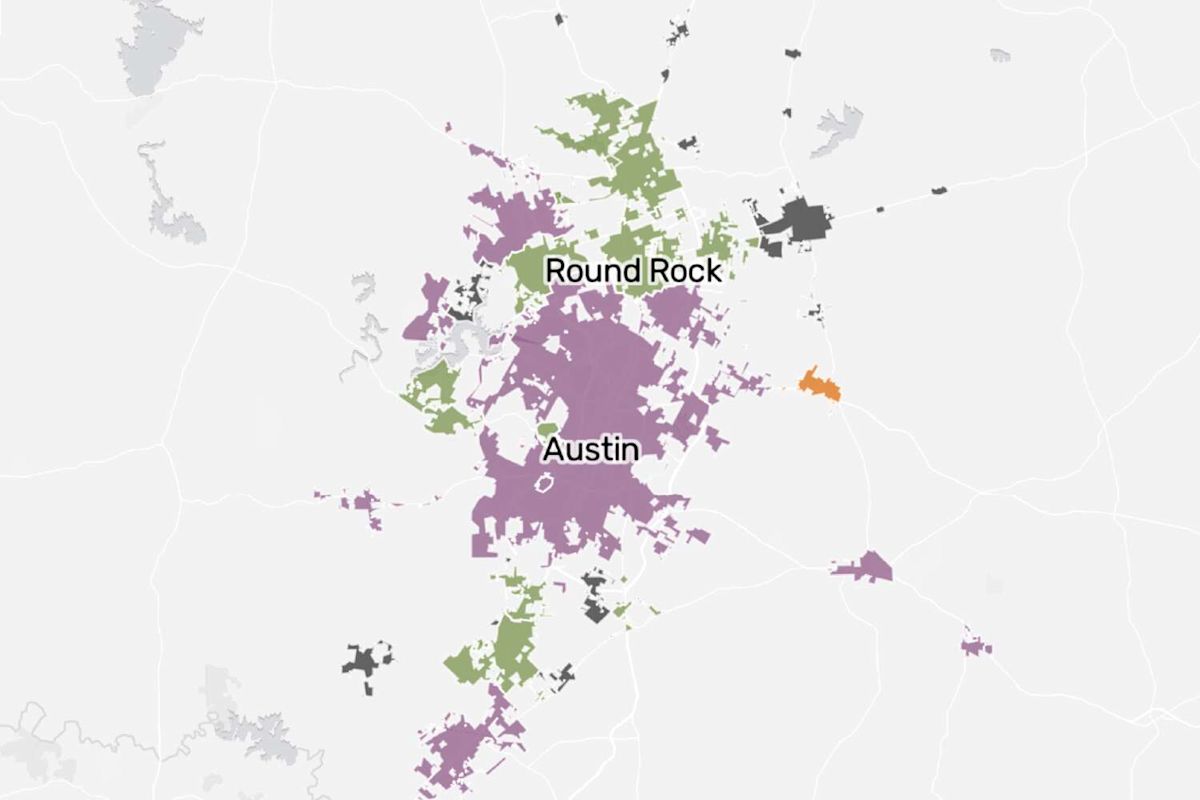
Across Central Texas, municipal governments are grappling with sharp disagreements over the use of automated license plate reader cameras. A comprehensive review of public records, municipal documents, and agency responses across Travis, Williamson, Hays, and Bastrop counties highlights a deeply fragmented landscape, with local leadership split on whether the surveillance tools represent essential crime-fighting assets or unacceptable intrusions on personal privacy.
The regional assessment reveals a near-even split among municipalities that have taken clear stances on the technology. As the debate over vehicular surveillance intensifies, nine Central Texas communities continue to actively utilize the scanning systems, while an equal number of nine cities have terminated their contracts with third-party vendors. Another municipality has temporarily suspended operations, and three have reported never adopting the equipment.
Among the jurisdictions maintaining active camera networks are Bee Cave, Buda, Cedar Park, Georgetown, Hutto, Lakeway, Mustang Ridge, Round Rock, and West Lake Hills. In these areas, police departments continue to capture vehicle movements, relying on automated alerts to aid local law enforcement operations.
Conversely, a growing coalition of communities has decided to sever ties with camera providers. Cities that have terminated their vendor agreements include Austin, Bastrop, Lago Vista, Leander, Liberty Hill, Manor, Pflugerville, San Marcos, and Sunset Valley. Meanwhile, the city of Elgin has placed its program on pause while evaluating next steps, and officials in Dripping Springs, Rollingwood, and Smithville have confirmed that they do not use the surveillance systems.
The retreat from automated monitoring has seen some local governments enact even broader policy changes. In Bastrop, city leaders moved beyond a simple vendor cancellation by voting to enact an outright ban on license plate reading technology within their municipal limits, establishing one of the most restrictive policies in the region.
The momentum against automated scanning grew rapidly following an August 25 decision by the Pflugerville City Council to terminate its contract with Atlanta-based vendor Flock. That vote was initiated after a local resident requested access logs to identify which outside law enforcement agencies had been querying and searching Pflugerville’s captured vehicle data.
Pflugerville's decision triggered a cascade of similar moves across neighboring jurisdictions, with Bastrop, Elgin, Manor, and Leander quickly revisiting, pausing, or ending their respective arrangements. The wave of municipal contract cancellations also followed a directive from Texas Governor Greg Abbott, who ordered state agencies to halt expenditures on Flock camera technology.
Public scrutiny has focused heavily on Flock, whose rapidly expanding network of roadside cameras has become a flashpoint for privacy debates across the United States. While several cities moved quickly to cut ties, other municipalities have taken a more cautious route regarding public involvement.
In Kyle, the City Council voted on September 5 against canceling its contract with Flock despite public pushback. Rather than making an immediate administrative decision, council members elected to consider placing a nonbinding measure on the May 2027 municipal ballot, offering local voters the opportunity to formally register their opinions on whether the automated cameras should remain operational.
Even in jurisdictions where formal contracts have ceased, privacy advocates note that technical loopholes can blur the boundaries of local oversight. In Austin, the police department’s direct access to an automated reader database ended when its contract with Flock lapsed in 2025. However, Austin officers can still obtain camera data from regional partner agencies that maintain lawful access to the system. Because Austin lacks formal written agreements governing these data transfers and does not track how often they occur, questions remain about the enforcement of local surveillance regulations.
The regional picture remains incomplete, as several municipalities have not clarified their operational status. Officials representing Bartlett, Coupland, Creedmoor, Florence, Granger, Jarrell, Jonestown, Taylor, Thorndale, Thrall, Weir, and Wimberley did not respond to requests regarding their use of license plate readers, leaving the extent of surveillance in those areas unconfirmed.
Advocates for automated readers maintain that the technology provides an invaluable tool for modern policing. Supporters emphasize that automated plate scans allow officers to quickly pinpoint stolen vehicles, track down suspects involved in serious offenses, and locate missing individuals through instant alerts that human patrol officers could not match manually.
On the other hand, civil liberties critics argue that creating searchable, automated databases of vehicular travel amounts to mass surveillance. Opponents warn that storing extensive travel histories creates significant risks of overreach, particularly when data is retained over long periods or shared across inter-jurisdictional networks without strict tracking mechanisms or binding public oversight.
As more Central Texas municipalities weigh the balance between public safety and civil privacy, the patchwork of local rules highlights an ongoing struggle to govern rapidly expanding surveillance technologies. Whether through voter referendums, contract terminations, or complete local bans, the regional debate over license plate readers continues to reshape municipal policy across Central Texas.





(0)