
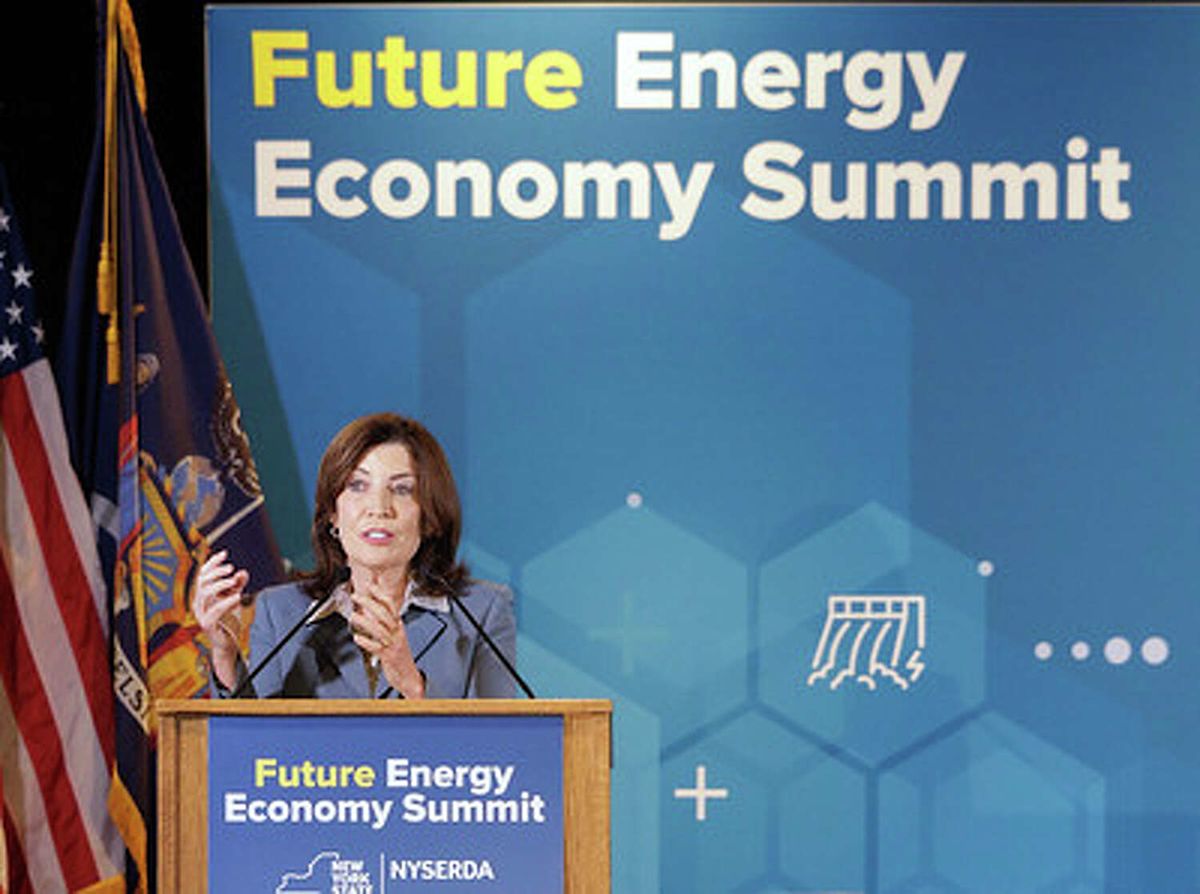
More than eight million New York households are slated to receive direct financial assistance from the state this month as Gov. Kathy Hochul rolls out a new round of taxpayer-funded relief aimed at offsetting surging electricity costs and elevated fuel prices.
The state will begin dispatching what officials have termed "energy rebate checks" starting on September 21, with staggered distributions continuing through the month of December. The disbursements are expected to reach approximately 8.2 million eligible residents across the state.
Financed through a $1 billion appropriation included in the state budget, the program establishes tiered payments linked to household earnings and filing statuses. State leaders designed the initiative to target middle- and lower-income New Yorkers feeling the pinch of sustained inflation and high utility expenses.
Under the adopted framework, married couples filing jointly who earn under $150,000 annually will receive the maximum payment of $200. Joint filers reporting household income between $150,000 and $300,000 are scheduled to receive $150, while single filers earning under $150,000 will be sent a payment of $100.
The state Department of Taxation and Finance will oversee the distribution process and issue the payments automatically. To qualify, residents must have submitted their 2024 state income tax filings on time, maintained full-time New York residency during that tax year, met the designated income caps, and avoided being claimed as dependents on another taxpayer's return.
Department of Taxation and Finance Commissioner Amanda Hiller praised the initiative as a meaningful administrative action to support working families navigating tough economic circumstances, noting that eligible individuals do not need to submit any formal application to secure their funds.
Gov. Hochul framed the relief checks as a core piece of her administration’s affordability platform, arguing that the financial aid directly assists working residents burdened by skyrocketing utility bills and steep retail gas prices. In defending the measure, the governor placed responsibility for broader consumer cost pressures on federal lawmakers in Washington.
The rollout comes amid data showing New Yorkers face some of the highest power costs in the United States. According to findings from the Albany-based Empire Center for Public Policy, which examined data from the federal Energy Information Administration, average residential electricity rates in New York have risen to approximately 29.99 cents per kilowatt hour.
That figure stands roughly 70 percent above the national residential average of 17.6 cents per kilowatt hour. The Empire Center's analysis noted that New York consumers pay about 50 percent more for electricity than neighboring Pennsylvania residents, while facing rates nearly double those paid in Florida and Texas.
Beyond electrical utility rates, the governor's office also linked the rebate rollout to volatility in the transportation fuel sector. Officials pointed out that retail gasoline has climbed to approximately $4.35 per gallon, which the administration identified as a 45 percent increase connected to the conflict in Iran.
This marks the second consecutive year that the Hochul administration and state lawmakers have disbursed direct cash rebates to New York households within specific income tiers. Last year, the state sent out "inflation refund checks" worth up to $400, a program that was also carried out in the months leading into the general election.
State records indicate that New York has channeled substantial taxpayer resources toward energy relief in recent years, distributing $7.6 billion in direct bill assistance and energy rebates to participating households since 2021. The administration stated that its fiscal year 2027 budget reshapes regulatory priorities to favor working families over large utility corporations.
Nevertheless, the timing and structural approach of the one-time rebates have drawn sharp criticism from political opponents. Assembly Minority Leader Ed Ra argued that issuing checks less than two months before an election functions as a tactical maneuver to score political favor rather than a comprehensive remedy for soaring cost burdens.
Ra maintained that while taxpayers certainly require relief, a $200 rebate does little to alleviate electricity bills that dramatically exceed nationwide averages, arguing the administration has failed to reverse energy price trajectories or improve grid stability.
Internal political friction has also accompanied the direct payment strategy. Lt. Gov. Antonio Delgado, who previously ended a primary bid challenging Hochul, argued against the approach during last year's distribution, labeling one-off checks as political spectacle and calling instead for structural, long-term investments in childcare, healthcare, and housing.
While state Republican Party leaders have continued to dismiss the one-time disbursements as superficial band-aids for deeper regulatory problems, many GOP state legislators did vote to approve the rebates earlier this year as a component of their own proposed legislative package aimed at tackling rising electricity rates.


(0)