
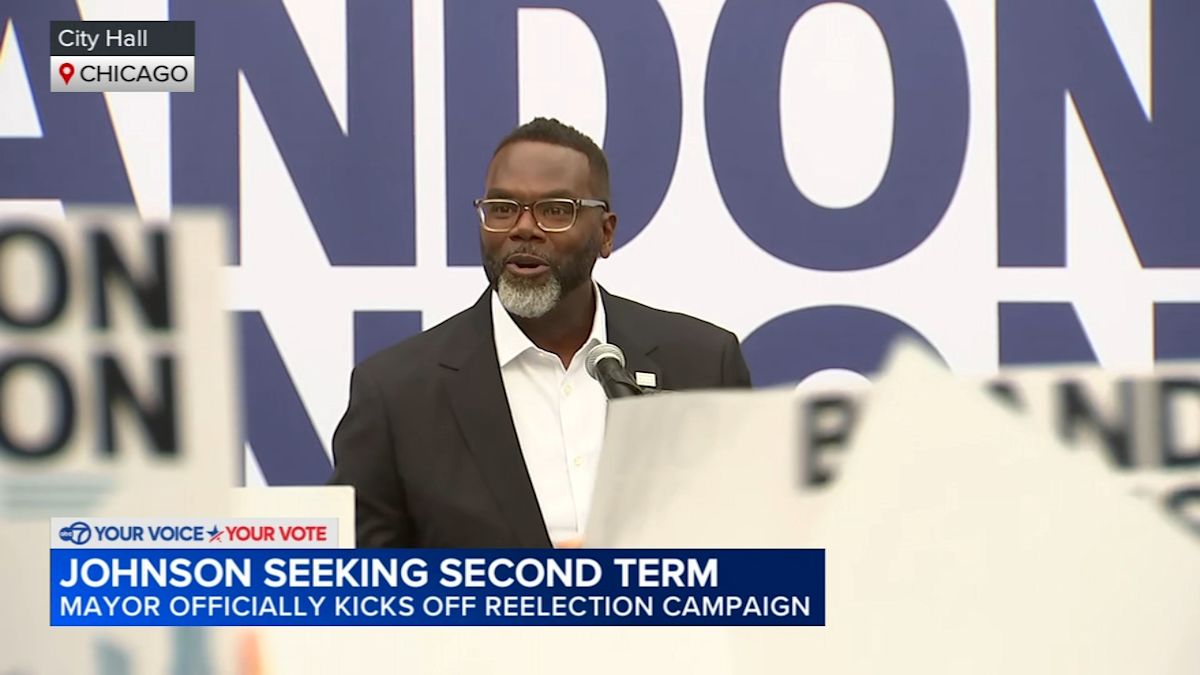
Chicago Mayor Brandon Johnson brought an end to months of political speculation on Sunday by formally launching his campaign for a second term, setting the stage for what is expected to be a fiercely contested municipal election cycle. Addressing supporters gathered on the grounds of the DuSable Museum campus, Johnson mounted a vigorous defense of his record in office while framing his reelection bid as an unfinished mission on behalf of working families.
The formal announcement resolved lingering uncertainty surrounding Johnson's political intentions and officially kicked off a high-stakes campaign that will place his leadership and policy agenda under intense scrutiny. With the citywide election scheduled to take place in five months, the mayor and his emerging slate of challengers are now preparing to make their contrasting cases to voters across the city.
The campaign launch took place under challenging conditions, as inclement weather disrupted the outdoor event. Rainfall caused logistical delays, resulting in a smaller crowd than organizers had initially anticipated, and several attendees departed the venue before the mayor stepped up to speak. Despite the subdued turnout, the atmosphere among the remaining crowd remained energetic as Johnson took the stage to announce his bid.
Wasting little time upon greeting the audience, Johnson directly confronted questions about his administration’s performance, asking the assembled crowd if they were prepared for four more years of his leadership. He argued that municipal conditions have substantially improved under his stewardship, declaring that Chicago has emerged as a safer, stronger, and more resilient city than when he assumed office in 2023.
Central to Johnson's reelection pitch was his administration's focus on public safety. The mayor highlighted tangible progress in reducing violent crime, pointing to notable downward trends in homicides and non-fatal shootings as evidence that his public safety strategy is yielding positive outcomes for neighborhoods historically impacted by violence.
In addition to crime statistics, the mayor emphasized an array of broader policy initiatives instituted during his first term. He pointed to significant municipal investments in community-level violence prevention initiatives, the expansion of job programs for local youth, the reopening of city-run mental health clinics, and the implementation of robust environmental protection measures as evidence of his progressive administration delivering on its early promises.
While the mayor focused extensively on his public safety accomplishments, his address did not touch upon recent acts of violence in the city, notably bypassing any mention of a mass shooting that had occurred over the weekend in the Humboldt Park neighborhood.
Throughout the launch event, Johnson was flanked by prominent progressive figures and community leaders who voiced unwavering support for his continued leadership. Among those speaking in favor of the mayor was Pastor Tanya Lozano, who commended Johnson for breaking traditional political molds. Lozano noted that after generations spent urging those in power to heed community needs, residents now have a leader in City Hall's fifth-floor executive office who directly translates those community demands into official action.
Johnson also utilized his speech to draw sharp political contrasts with external and internal critics. He directed criticism toward national figures, specifically citing President Donald Trump, and asserted that political pressures from conservative opponents had failed to fracture the city's resolve or derail his administration's goals. Johnson stated that the city remains standing and is stronger than ever despite outside opposition.
Turning his attention closer to home, the mayor issued a pointed warning regarding his local political rivals. Johnson urged supporters and voters across the city to look closely at the field of candidates and learn to distinguish authentic progressive leaders from political contenders whom he characterized as posers attempting to adopt progressive rhetoric without genuine commitment.
Grounding his political identity in his background as a former union organizer, Johnson reaffirmed his solidarity with working-class residents and grassroots movements. He reminded the audience that he remains accountable to the everyday people who helped propel him to City Hall, stressing that the governance of Chicago ultimately belongs to its residents and declaring that his administration is only getting started.
Economic justice formed a core pillar of the mayor's closing appeal, as he doubled down on his long-standing push to reform local tax structures. Johnson told the crowd that his administration will continue pressing forward until the ultra-wealthy pay what he described as their fair share of taxes, insisting that securing this economic shift is central to the rationale for sending him back to the fifth floor for a second term.
Immediately following the conclusion of the rally, Johnson shifted directly into campaign mode, launching neighborhood canvassing efforts to gather the required petition signatures for ballot placement. The mayor engaged in door-to-door outreach to personally connect with voters and build momentum for the months ahead.
Reflecting on the challenges of the upcoming campaign compared to his initial run for the mayoralty, Johnson acknowledged that his political path has never been smooth or simple. He remarked that meaningful progress for working-class communities is rarely achieved without enduring struggle and persistent public demand, signaling his readiness for a demanding five-month sprint to election day.





(0)