
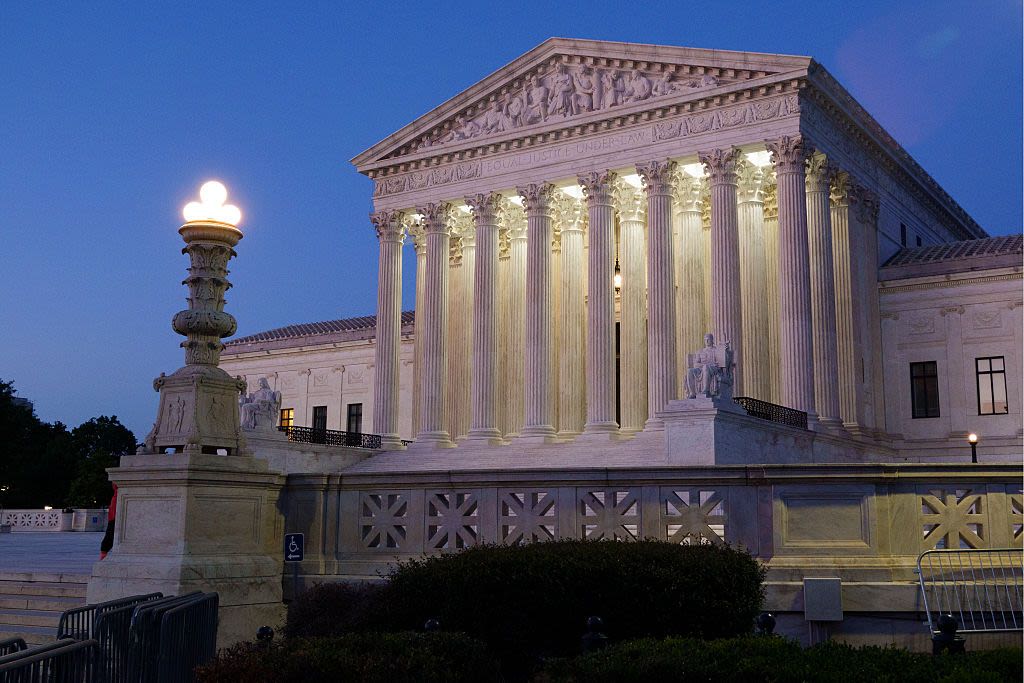
The Supreme Court has turned down an emergency application from the Trump administration that sought permission to enforce elements of a newly established U.S. Postal Service regulation governing mail-in voting. In a short, unsigned order released on Monday, the justices opted not to disturb a lower court ruling that currently blocks the federal government from putting specific portions of the election-related postal measures into effect.
The high court’s decision leaves in place an injunction originally issued by a federal district judge based in Boston. By declining the administration’s request to intervene on an emergency basis, the justices effectively barred the Postal Service from altering mail-in voting procedures during the critical weeks leading up to the nationwide November elections.
Justice Brett Kavanaugh authored a separate, one-paragraph concurring opinion expressing his agreement with the decision to deny emergency relief. While Kavanaugh indicated that the Postal Service might possess the underlying legal authority to issue such administrative regulations, he underscored that practical timing constraints made enforcement unworkable for state and local election administrators.
In his concurring statement, Kavanaugh stressed that election administrators across the country simply do not possess sufficient time to implement the complex federal rules in a reasonable manner before voters cast their ballots. For that practical reason, he concluded that changing the procedural requirements this close to the election cycle was unwarranted.
Justice Samuel Alito authored a dissenting opinion, which was joined by Justice Clarence Thomas. Alito contended that the Supreme Court should have granted the administration’s request for an emergency stay, maintaining that the federal government had satisfied the necessary legal criteria to justify putting the lower court’s injunction on hold.
In his dissent, Alito argued that several of the legal challengers involved in the lawsuit lacked proper standing to bring their claims before the judiciary. For the remaining parties in the case, Alito asserted that they were pursuing legal arguments that the Supreme Court had previously characterized as the equivalent of a rare and typically unsuccessful legal maneuver.
The high court’s ruling arrives less than two months before the upcoming November midterm elections, a period during which state election calendars are already actively moving forward. In fact, election officials in at least two states, Alabama and North Carolina, have already initiated the process of distributing absentee and mail-in ballots to registered voters.
The underlying dispute originated in March, when President Donald Trump signed a sweeping executive order intended to address mail-in voting procedures as part of a wider campaign targeting alleged election irregularities and voter fraud. The directive commanded several executive branch agencies to take concrete measures regarding the administration of federal voting processes.
Among its provisions, the presidential directive instructed the Department of Homeland Security to assemble and distribute lists of adult United States citizens to every individual state at least 60 days before federal elections take place. Additionally, the order directed the U.S. attorney general to actively investigate and prosecute any state election officials who permit ineligible individuals to participate in the voting process.
In response to the executive action, a coalition of 23 states, led by California, alongside the District of Columbia, filed a federal lawsuit in Massachusetts. The plaintiff states sought to prevent the executive branch from enforcing the new mandates, arguing that the administration had overstepped its constitutional boundaries.
In their legal complaint, the state attorneys general maintained that the presidential directives directly conflicted with the United States Constitution. Specifically, the states pointed to constitutional provisions that reserve the power to determine voter eligibility criteria and establish the times, places, and manner of conducting congressional elections to the individual states.
U.S. District Judge Indira Talwani sided with the state challengers during an earlier phase of the litigation. On June 25, Judge Talwani issued an order temporarily barring the federal government from executing aspects of the president’s executive order within California, the District of Columbia, and the other participating plaintiff states ahead of the November vote.
The legal battle subsequently escalated to the Supreme Court, which stepped in on August 24 to stay Judge Talwani’s original preliminary injunction. At that juncture, the high court majority reasoned that the multi-state legal challenge had been mounted prematurely, pointing out that because the directives had not yet been executed, the states had not demonstrated the tangible injury required for legal standing.
Following the Supreme Court's August action, the Postal Service issued an administrative rule to carry out the executive order, prompting Judge Talwani to issue a fresh 14-day injunction on August 27. Her new order specifically prohibited the federal government from forcing states to follow specific USPS mandates, including specialized envelope design standards for mailed ballots and mandatory data uploads to a centralized postal portal.
In response to the newly imposed restrictions, government attorney Sauer submitted an urgent appeal to the Supreme Court seeking to lift Judge Talwani’s injunction. The administration argued that the district judge’s rationale was overly simplistic and represented an ongoing and unfounded prejudgment against the Postal Service’s regulatory actions.
With the Supreme Court’s latest order declining to grant the requested stay, the nationwide election machinery will proceed without the enforcement of the contested Postal Service mandates. The ruling provides immediate operational stability for state election authorities, ensuring that current mail-in ballot formats and processing procedures remain unchanged throughout the November election cycle.


(0)