
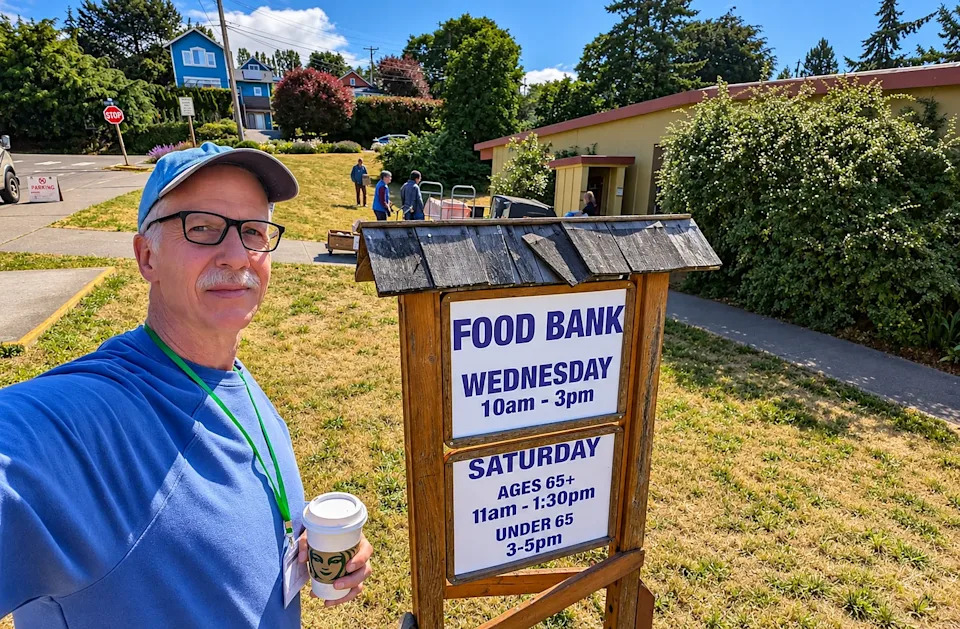
At a bustling food distribution pantry in Port Townsend, Washington, everyday operations reveal a reality that starkly contrasts with dismissive characterizations often directed at lower-income Americans. While high-profile technology executives have occasionally disparaged recipients of assistance programs as an unproductive burden on society, grassroots observations from the facility's pantry line demonstrate a culture defined by profound restraint, mutual aid, and relentless work ethic.
The coastal Washington facility has experienced a steady surge in foot traffic, driven primarily by escalating living costs that place severe pressure on household budgets. Over the course of six months of operations, volunteers have assisted more than a thousand individuals. The demographic makeup of those seeking aid is wide-ranging, encompassing large families of seven, retired seniors living on fixed incomes, individuals managing disabilities, and low-wage workers struggling to keep pace with basic necessities.
Frontline interactions continually contradict conventional stereotypes regarding greed or exploitation among aid recipients. In one illustrative case, a severely underweight man in his sixties named Cal, who lives with a disability, initially declined a jar of natural peanut butter. Believing supplies were scarce, he insisted on leaving the item behind for a family with young children, only accepting the protein staple after a volunteer assured him that ample inventory remained in storage.
Such selflessness is far from an isolated incident. Across more than a thousand client interactions, volunteers report that only two individuals ever requested what might be considered an unreasonable quantity of goods. Furthermore, there is no evidence of patrons acquiring complimentary provisions to resell them. Instead, the most common refrains heard throughout distribution days are questions verifying whether the pantry has adequate stock and polite refusals aimed at preserving resources for larger households.
This ethos of communal care extends beyond individual households to broader neighborhood support networks. For example, a patron named Janet regularly navigates the distribution line with a shopping cart for her own household of six, while simultaneously securing provisions for mobility-impaired neighbors who cannot physically visit the site. Similarly, another visitor gathering ingredients for a large batch of chili took care to inform volunteers that the meal was being prepared to help feed his sister’s family, who had not yet enrolled in the program.
The demographic realities of food bank visitors also challenge widespread assumptions about employment and dependency. A significant portion of those receiving nutritional assistance are actively employed, yet find their wages insufficient in an inflationary climate. On several occasions, pantry workers have provided staples like rice to individuals in the morning, only to encounter them working shifts at local fast-food establishments later the same day. Other regulars include healthcare staff, such as nursing home aides who arrive directly from grueling overnight shifts to gather groceries for their children.
The logistical operations keeping the facility functional depend almost entirely on physical labor contributed by seniors and retirees, many of whom are pantry patrons themselves. These volunteers manage heavy workloads without complaint, routinely unloading commercial delivery trucks stocked with farm donations, redistribution center allocations, and near-expiration grocery goods.
The daily operational checklist requires constant physical and administrative coordination. Staff members register new households, process complex redistribution supply orders, track volunteer service hours, wash produce, restock shelves, haul refuse, and break down towering stacks of cardboard containers. This dedicated effort underscores the vital human infrastructure required to support community food security.
These frontline dynamics provide a direct counterweight to rhetoric popularized by elite tech figures. Billionaire Elon Musk recently amplified a meme labeling Americans who depend on public support initiatives as the "parasite class." However, the daily experience of distribution workers shows that the overwhelming majority of recipients are conscientious individuals navigating severe economic head winds.
The broader tech sector has often presented contrasting or contradictory philosophies regarding economic inequality. While Amazon founder Jeff Bezos has suggested that the lower half of American earners should be exempt from federal income taxes, Meta executive Mark Zuckerberg has voiced sympathy for progressive critiques concerning extreme wealth concentration. Musk himself has frequently claimed an ambition to eradicate global poverty and elevate living standards worldwide through technological progress.
Yet, significant questions remain regarding the tangible impact of tech-driven policies and proposed solutions. Both Musk and Zuckerberg have positioned artificial intelligence as a primary remedy for economic hardship, despite warnings from leading economists that unregulated technological disruption may exacerbate wealth disparities. Meanwhile, federal budget reductions linked to Musk's DOGE initiative have cut roughly $1 billion in United States Department of Agriculture funding that previously enabled food pantries to purchase fresh goods directly from regional farmers.
Fiscal contributions from the nation's wealthiest individuals also remain a subject of intense scrutiny. While venture capitalists such as Peter Thiel frequently voice grievances regarding high tax obligations, investigative findings from ProPublica indicate that the wealthiest Americans often face effective tax rates between three and ten percent when factoring in stock gains, with the top 25 fortunes taxed at an estimated true rate of just 3.4 percent.
Ultimately, the day-to-day operations inside local food distribution centers illustrate a deep divide between abstract economic commentary and on-the-ground human realities. Far from exhibiting parasitic behavior, those relying on food assistance consistently demonstrate resilience, consideration for their neighbors, and an acute awareness of shared community needs.





(0)