
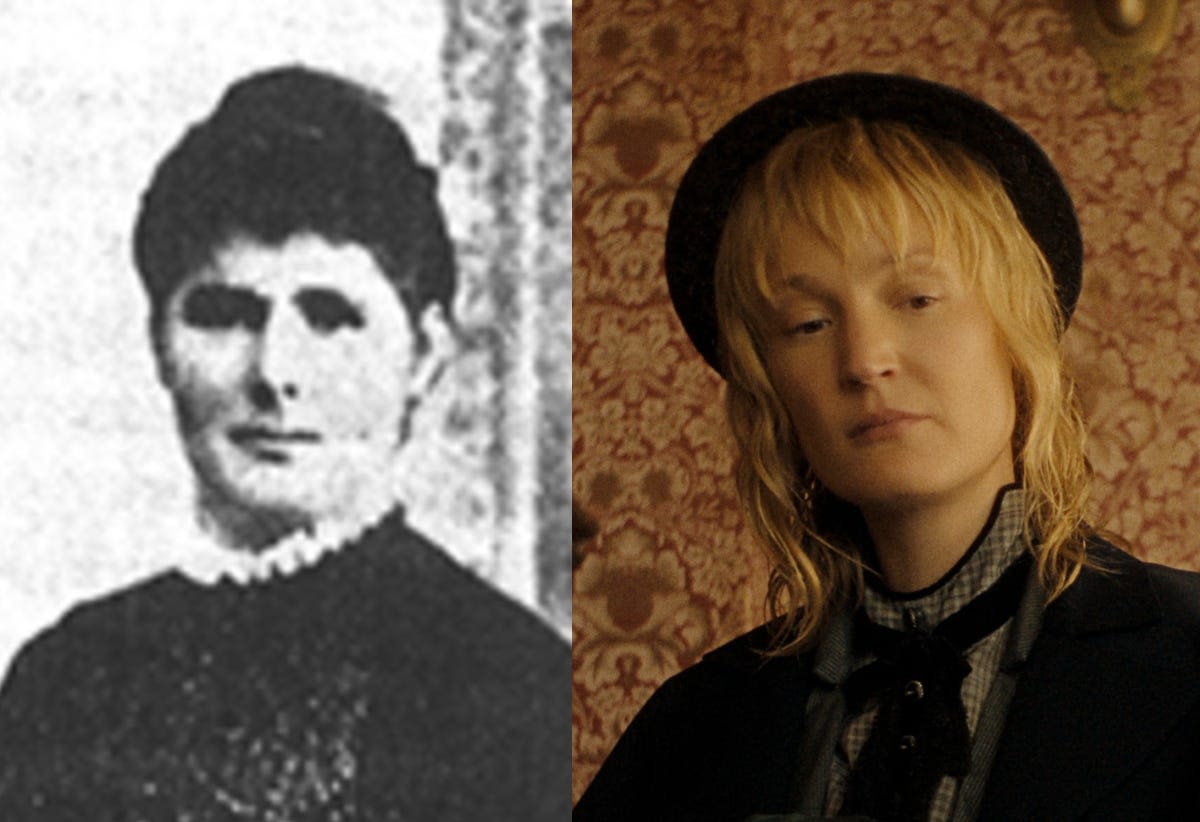
The premiere of Ryan Murphy’s television drama "Monster: The Lizzie Borden Story" on Netflix has reignited widespread public fascination with one of the most infamous true-crime cases in American history. As the production brings the gruesome 1892 double homicide back to television screens, significant attention is once again centered on Bridget Sullivan, the Borden family maid who found herself at the epicenter of the tragedy.
In the streaming series, Luxembourgish actor Vicky Krieps steps into the role of Sullivan, portraying the domestic servant alongside Ella Beatty’s Lizzie Borden. Krieps takes on the character despite speaking with a noticeable German accent, prompting discussions among historians and viewers regarding how faithfully the modern dramatization adheres to the established historical record of late-nineteenth-century Massachusetts.
Historically, Bridget Sullivan was a young Irish immigrant who entered the employ of Andrew and Abby Borden at their Second Street residence in Fall River in 1889. Tasked with handling relatively light domestic chores, Sullivan spent several years navigating the interior life of a household that was fraught with internal family conflict.
Historical documentation indicates that the living environment within the Borden home was remarkably uncomfortable. Sullivan was regularly exposed to the palpable hostility that Lizzie Borden and her older sister, Emma, harbored toward their stepmother, Abby. The friction between the daughters and Abby created an atmosphere so unpleasant that the domestic worker repeatedly reconsidered her position in the household.
According to historical research compiled by Michael Martins and Dennis Binette in their notable Fall River history volume "Parallel Lives," Sullivan tried to resign from her domestic post on more than one occasion. Each time she attempted to leave, however, family members persuaded her to remain, with Abby Borden offering to raise her compensation on at least one instance to ensure she stayed.
Sullivan’s personal observations regarding the internal dynamics of the residence were documented by contemporary media outlets following the tragedy. In an 1892 report published by the Boston Post, Sullivan offered candid insight into the family divide, noting that Abby Borden was simply too good for the household and observing that the daughters openly disliked their stepmother.
A curious detail of Sullivan's time with the family was the name by which she was routinely addressed. Both Emma and Lizzie Borden consistently referred to Sullivan as "Maggie" rather than using her actual given name. While neither sister provided an extensive chore list for themselves, they maintained this habit throughout Sullivan’s tenure in the home.
Scholars and observers have long debated the motivation behind this moniker, with some suggesting that using an incorrect name was a slight that reflected a lack of personal regard for the maid. Nevertheless, historians also note that during the late Victorian era, it was a relatively widespread practice among members of the upper social classes to refer to domestic workers by generic or alternate names.
The days leading up to the murders on August 4, 1892, were marked by physical distress inside the residence. Several occupants of the Second Street home suffered from severe gastrointestinal distress, an ailment attributed to food-borne illness brought on by the intense summer heat and the family's insufficient refrigeration methods.
While popular folklore has often claimed that the family fell ill due to consuming tainted mutton for breakfast, legal records and testimony tell a different story. The Borden family had already begun experiencing symptoms of sickness well before the mutton was ever prepared or served at the morning table.
On the morning of the slayings, Sullivan herself succumbed to the pervasive nausea affecting the household. According to her official testimony, she completed serving breakfast to the family before being overcome by illness, forcing her to step outside into the yard to vomit shortly before 9:00 a.m.
After resting outdoors for a few minutes to recover from her sickness, Sullivan returned inside to attend to her daily responsibilities, which included cleaning the windows. It was during this very window of time that both Abby and Andrew Borden were struck down and killed inside the home, leaving Sullivan as a critical witness to the surrounding timeline.
In recent decades, sensationalized adaptations of the case have advanced the theory that Sullivan and Lizzie Borden shared a clandestine romantic relationship. This narrative suggests that an illicit romantic bond motivated the two women to conspire together in carrying out the brutal hatchet murders.
This premise of a secret romance was notably featured in Evan Hunter’s 1984 novel "Lizzie," revisited in the 2018 biographical film "Lizzie" starring Chloë Sevigny, and incorporated into Murphy’s Netflix dramatization. Such depictions have frequently framed Sullivan not merely as a bystander or witness, but as an active conspirator and accessory to the crime.
Despite the prevalence of this narrative across modern entertainment media, archival records offer no evidence to substantiate claims of a romantic affair between the two women. Historians emphasize that there is no factual foundation indicating Sullivan was a lesbian, nor is there any contemporaneous proof suggesting her relationship with Lizzie Borden went beyond the standard boundaries of a domestic servant and her employer.
Following the extensive court proceedings and Lizzie Borden's eventual trial, Sullivan chose to distance herself from Fall River entirely. Although she briefly traveled back to her native Ireland in the aftermath of the legal battle, she subsequently returned to live in the United States, permanently leaving behind the Second Street residence and the community where the murders took place.





(0)