
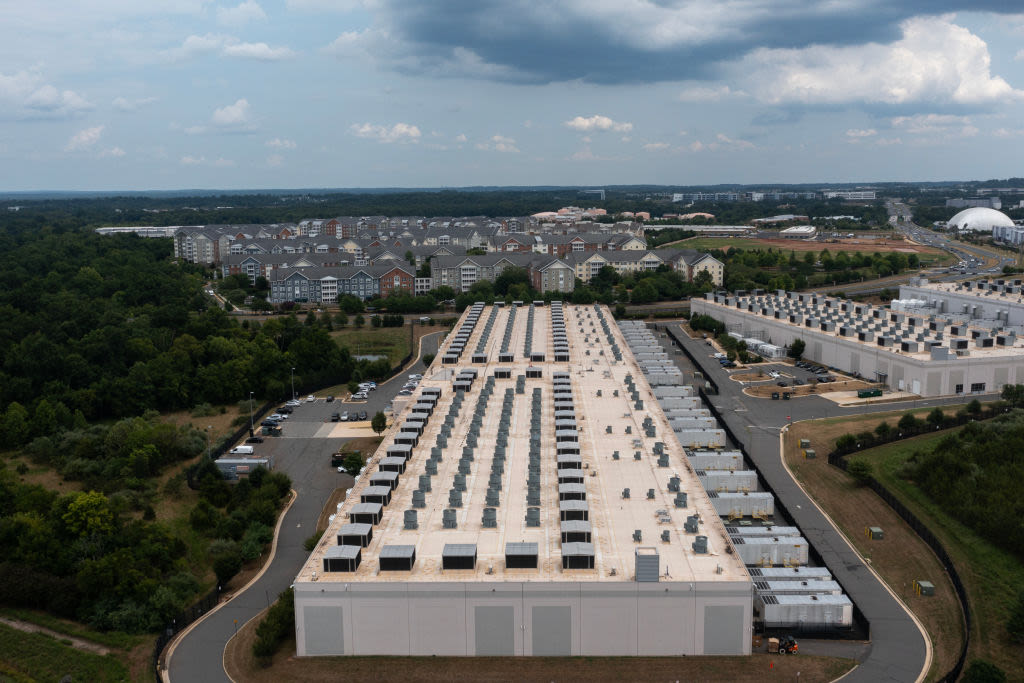
Voters across 18 municipalities and townships in Ohio are set to decide the future of data center developments within their jurisdictions on Election Day. The local ballot measures represent an escalating grassroots reaction to the rapid expansion of digital infrastructure across the state, giving residents direct authority over whether and how large-scale computing hubs can operate in their neighborhoods.
The surge of local initiatives comes after the official September 4 deadline for submitting charter amendment petitions to municipal councils for inclusion on the November 3 general election ballot. Under Ohio municipal law, registered voters residing in charter communities maintain the ability to file amendment petitions at any point in the year; however, if an upcoming regular election falls outside the window of 60 to 120 days from filing, local authorities are required to schedule a special election instead.
In nine distinct municipalities—Conneaut, Defiance, Granville, Oregon, Pataskala, Piqua, Sunbury, Trenton, and Upper Sandusky—voters will consider ballot measures that restrict facilities by power usage. These coordinated municipal petitions seek to establish an outright prohibition on any data center projects that consume more than 25 megawatts of electricity per month.
The nine local measures mirror a wider statewide campaign organized by the advocacy group Conserve Ohio. Although organizers were unable to meet a July filing deadline to secure a statewide constitutional amendment on this year's ballot, the organization is actively working toward qualifying the measure for the 2027 general election while supporting local efforts to enact municipal restrictions.
Conserve Ohio emphasized that its ongoing efforts are designed to help residents reclaim authority over their local zoning and utilities. In a formal statement, the organization explained that it is partnering with communities across the state to pass local bans and create local governance models that function directly by and for the residents.
The political pushback emerges as Ohio solidifies its standing as one of the country's primary hubs for technology infrastructure. An analysis released in April by the Pew Research Center revealed that Ohio currently hosts the fourth-highest number of operational data centers in the United States, with major tech corporations and real estate developers actively seeking permits to construct dozens of additional facilities.
Local friction has intensified because 14 of the 18 jurisdictions with measures certified or pending have already received formal development applications for new computing hubs. Across these communities, residents have raised significant concerns regarding the massive electricity requirements of these facilities, fear of rising utility rates, localized environmental disruptions, and the rapid, unchecked rise of artificial intelligence infrastructure.
The tensions are particularly pronounced in the city of Piqua, where petition organizer Alisha Lange has spearheaded multiple civic resistance drives. Lange's activism initially took shape in 2023 after a municipal battery facility resulted in enduring health issues for her and surrounding neighbors. Despite repeatedly approaching elected representatives, including U.S. Rep. Mike Carey, Lange found that private discussions produced minimal assistance for the community.
Frustrations mounted significantly after Meta unveiled plans to establish a massive data center complex in Piqua that is projected to require approximately 1,400 megawatts of electricity. Viewing private negotiations as ineffective, Lange helped gather sufficient voter signatures to initiate recall efforts against Piqua's mayor and two sitting city commissioners who backed the initiative.
Civic organizers in Piqua also filed additional measures aimed at reshaping the local political landscape. These included petitions to harmonize municipal recall signature rules with broader state standards and an effort to invalidate a municipal utility agreement established to provide power to the proposed Meta data center.
Resident feedback during the petition drives also prompted even stricter proposals. While canvassing for the 25-megawatt cap, Lange discovered that many community members favored excluding data centers entirely, leading to a separate petition for a full prohibition that gathered enough valid signatures to trigger a special election. Lange observed that while the presence of data centers has caused division, the collective petitioning has built strong solidarity among frustrated neighbors.
Other Ohio communities are approaching data center regulation through varying structural models. In Urbana, voters will review a charter amendment that imposes an even lower consumption threshold, barring data centers that exceed 7.5 megawatts of electrical demand.
Meanwhile, the city of Hubbard stands as the only Ohio municipality that will present an outright, total prohibition on all data centers to voters on the November ballot, rather than relying on capacity limits or power consumption caps.
In central Ohio, the push for oversight extends beyond computing centers alone. In Pleasant Township, resident Jen Belt, who resides within two miles of a planned data center development in neighboring Grove City, joined a drive to establish mandatory community consent and voter oversight for any proposed heavy industrial developments in the city.
Collectively, the 18 municipal initiatives on the November ballot illustrate how Ohio has become a central battleground in the national debate over technological expansion, municipal zoning, and industrial power consumption.


(0)