
A lucrative cottage industry of political operatives, lobbyists, and right-wing figures has emerged around the federal clemency process, offering convicted individuals direct access to President Donald Trump in exchange for staggering fees. Promising to circumvent the standard bureaucratic channels of the federal government, these self-styled pardon brokers claim they can secure presidential mercy by applying targeted, relentless pressure on the executive branch.
The inner workings of this unregulated marketplace were recently brought to light through an undercover investigation conducted by CBS News' "60 Minutes." Armed with hidden cameras, the news organization documented how operatives court potential clients who are desperate for relief from federal criminal convictions, charging hundreds of thousands—and in some cases millions—of dollars to lobby the White House on their behalf.
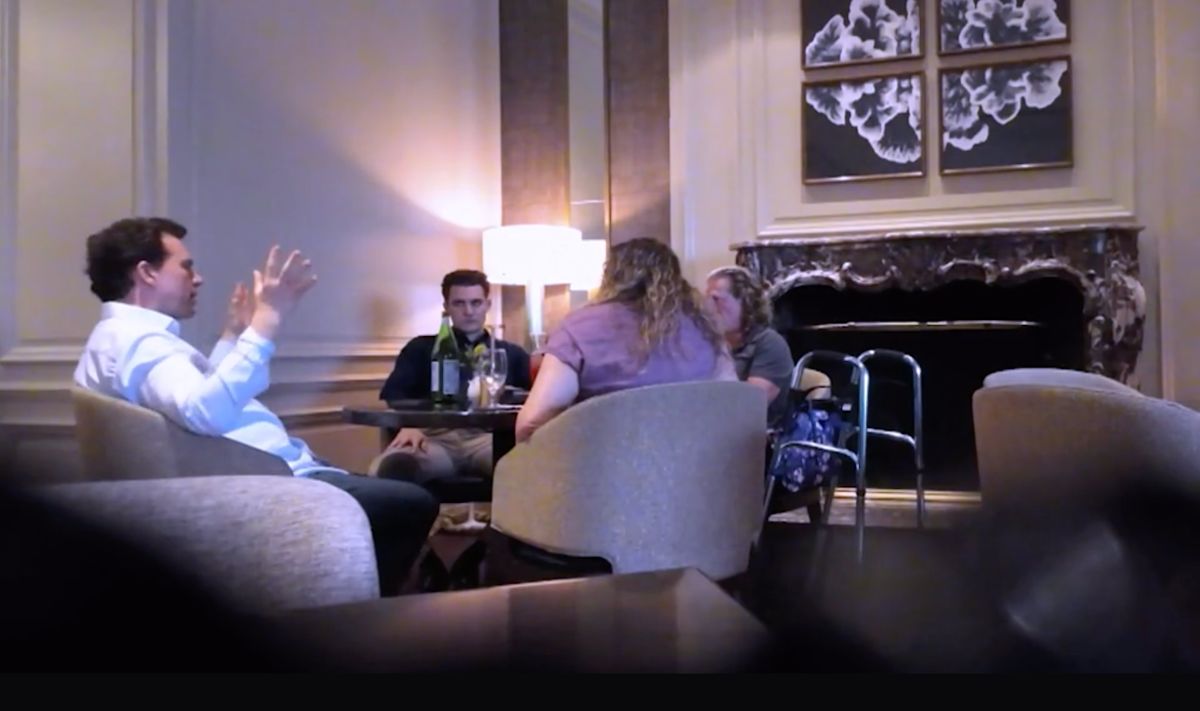
At the center of one captured pitch were conservative provocateurs and lobbyists Jack Burkman and Jacob Wohl. Seated inside a bar at the upscale Ritz-Carlton hotel in Tysons Corner, Virginia, just outside the nation's capital, the pair met with prospective client Ammon Covino and his wife, Crystal. Unbeknownst to Burkman and Wohl, Covino was participating in the network's investigation rather than seeking their representation.
During the mid-August meeting, Burkman laid out his strategy for navigating the current administration's clemency apparatus. He explained to Covino that securing relief from this White House required continuous and multifaceted pressure to force the president's hand. In their view, traditional administrative procedures have taken a back seat to energy, public momentum, and direct personal connections.
Covino, an aquarium operator, had previously served nearly two years in federal prison after being convicted of unlawfully transporting a shark and a stingray across state lines. Seeking to clear his record, he had initially followed traditional protocols by mailing a clemency application to the Department of Justice during the Biden administration. However, his petition was officially denied in July by Trump as part of a broad administrative initiative to clear out a large backlog of pending cases.
Burkman and Wohl offered Covino an alternative route to circumvent that rejection. For a fee of $300,000, the operatives claimed they could orchestrate a targeted influence campaign that would secure a full presidential pardon as early as October. They emphasized that their approach relied heavily on insider relationships and assertive advocacy rather than the standard legal assessments conducted by government attorneys.
The pitch reflects a dramatic evolution in how presidential pardons have been administered over the past 18 months. On his first day back in office, Trump bypassed standard channels to grant clemency—via pardons, sentence commutations, and dropped prosecutions—to more than 1,500 individuals charged or convicted in connection with the Jan. 6, 2021, attack on the U.S. Capitol. Since then, dozens of additional clemency grants have been awarded to white-collar offenders, many of whom possess substantial wealth and high-level political connections.
This approach marks a sharp break from the historical norm, in which clemency petitions were formally processed through the Justice Department's Office of the Pardon Attorney. Historically, more than two dozen career DOJ lawyers reviewed applications based on established legal criteria, including the applicant's genuine remorse, good conduct, and verified evidence of rehabilitation, before forwarding recommendations to the Oval Office.
Today, that traditional process has been largely sidelined. According to an analysis of Justice Department data conducted by CBS News, approximately 70 percent of clemency actions granted during Trump's second term were not routed through the DOJ. When factoring in the sweeping Jan. 6 clemency grants, that figure surges to 92 percent, underscoring the extent to which conventional vetting has been displaced.
In this altered landscape, personal access has become the ultimate coin of the realm. Pardon brokers seek to influence the president by leveraging connections within the White House, enlisting prominent MAGA influencers, and collaborating with individuals in Trump's inner circle. Sources familiar with the clemency ecosystem told CBS News that brokers regularly demand fees ranging from hundreds of thousands of dollars up to $3 million on the promise of delivering that coveted access.
Controversy surrounding presidential pardons is not entirely new to American history. Past commanders in chief have frequently faced intense public criticism for high-profile clemency decisions. President Gerald Ford famously pardoned former President Richard Nixon, while President Jimmy Carter granted broad relief to Vietnam War draft evaders. On his final day in office, President Bill Clinton pardoned fugitive financier Marc Rich, whose former spouse, Denise Rich, was a prominent donor to Clinton's presidential library foundation.
More recently, in December 2024, President Joe Biden drew severe scrutiny for issuing late-term pardons to allies, political donors, and members of his own family. Among the recipients was his son, Hunter Biden, who had been convicted on federal firearms charges and had pleaded guilty to tax evasion offenses. Biden also issued a preemptive pardon to former chief medical advisor Anthony Fauci.
Despite these historical precedents, legal experts, defense attorneys, and federal prosecutors express broad consensus that the current environment is fundamentally different. They describe the modern clemency landscape in Washington as an unprecedented "Wild West," characterized by transactional influence and a complete departure from institutional norms.
Legal scholars warn that this shift threatens the integrity of the constitutional pardon power. Mark Osler, a law professor at the University of St. Thomas in Minnesota who directs a pro bono clinic assisting federal convicts with standard DOJ petitions, voiced alarm over the commercialization of presidential mercy. He noted that the clemency system was designed to be free and universally accessible, yet it has evolved into a pay-to-play arena that privileges the wealthy and well-connected.
Osler observed that hopeful applicants now increasingly believe the only viable path to relief is through financial leverage and personal proximity to power. Rather than relying on traditional demonstrations of rehabilitation, clemency seekers now operate under the assumption that hiring a well-connected lobbyist, reaching an associate at Mar-a-Lago, or paying a seven-figure sum to a friend of the White House counsel is the only way to have a realistic chance at freedom.





(0)