
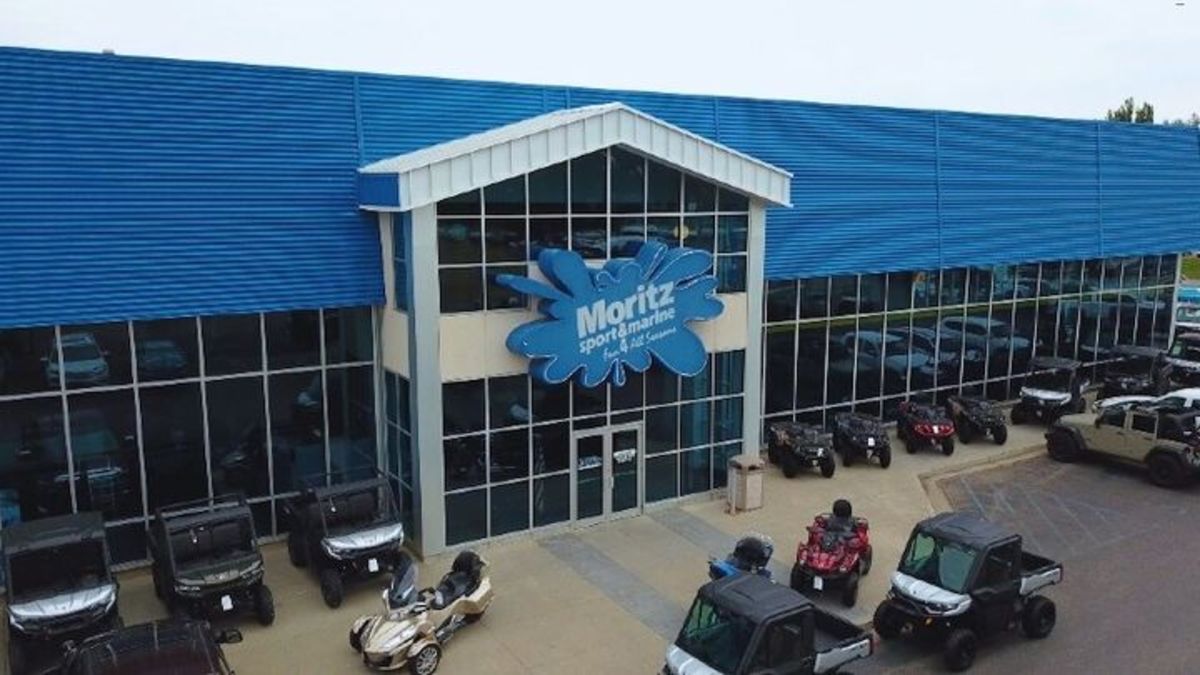
Applying automotive sales principles to powersports retail has proven to be a lucrative strategy for Eric Moritz. As the head of Moritz Sport & Marine in Bismarck, North Dakota, Moritz has built a powerhouse dealership by adapting the playbook he mastered in the car business, demonstrating how traditional auto retail methodologies can transform utility vehicle distribution.
The dealership's sales figures illustrate the effectiveness of this operational model. Moritz Sport & Marine delivers approximately 300 brand-new side-by-side units each year. According to Moritz, these transactions generate roughly $10 million in annual gross revenue solely from new side-by-side sales, even before accounting for the dealership's substantial volume in pre-owned inventory.
In addition to its new vehicle turnover, the Bismarck store moves between 200 and 300 used ATVs and UTVs annually. This blended sales volume highlights the steady consumer demand for off-highway utility vehicles in the upper Midwest, where rural, agricultural, and recreational drivers increasingly rely on versatile utility-task machines.
The foundation of the dealership is rooted directly in the traditional automobile market. Nearly three decades ago, Moritz and his father leveraged their backgrounds in automotive sales to acquire an existing Chevrolet dealership in Bismarck. In 1997, they converted that automotive franchise into Moritz Sport & Marine, setting the stage for decades of steady growth.
The dealership's auto-centric management philosophy was further reinforced during a pivotal leadership transition in 2020. When Moritz's father retired, the family shares were acquired by fellow local automotive dealership owners. This ownership structure ensured that the business maintained a rigorous, car-industry approach to customer service, floor management, and financing.
According to Moritz, the broader powersports retail sector continues to trail the passenger car industry by roughly five years. This gap appears not only in retail technology but fundamentally in how powersports storefronts manage their day-to-day business operations and organize their sales environments.
To bridge that gap, Moritz Sport & Marine relies on a centralized, full-service sales desk that mirrors the experience found in top-tier car dealerships. Rather than passing buyers between disconnected departments, the dealership gathers the customer, sales manager, finance staff, service representatives, and accessory specialists together in a single collaborative consultation.
The objective behind this unified sales process is to ensure that buyers can customize and finance their machine in a single visit. Customers drive away with a fully equipped vehicle featuring all desired add-ons while establishing an ongoing relationship with the service and parts departments, a proven retention tactic imported directly from auto dealerships.
A primary driver of this commercial success is the popularity of the Can-Am Defender line. Full-cab configurations of the Defender have emerged as the dealership’s top revenue-generating vehicle segment outside of its marine offerings, completely changing the store's annual sales velocity over the past ten years.
Before Can-Am introduced the Defender roughly a decade ago, the Bismarck dealership sold merely 10 to 15 new side-by-side units per year. The arrival of capable, enclosed utility platforms catalyzed rapid retail expansion, turning what was once a minor product category into the store's primary powersports offering.
To keep pace with the maintenance, customization, and warranty demands generated by higher unit volume, the dealership has significantly expanded its technical operations. The store's roster of dedicated Can-Am technicians has doubled in recent years, reaching a total of 12 service specialists.
Consumer interest is heavily driven by fully enclosed cab models equipped with automotive-style creature comforts, such as factory heating and air conditioning. When paired with street-legal upgrade packages, these fully conditioned side-by-sides function as practical alternatives to traditional pickup trucks for everyday regional travel.
North Dakota's regulatory environment has contributed significantly to this trend. State law permits off-highway vehicles to operate on paved non-highway roadways. Once outfitted with aftermarket or factory street-legal components—including turn signals, rearview mirrors, a horn, and an official license plate—the machines are fully street-legal throughout the state.
Despite rapid growth, Moritz identifies rising retail costs as a notable headwind for the sector. As fully optioned, enclosed side-by-sides approach prices near $50,000, market affordability has become a primary operational consideration for powersports dealers managing high-value inventory.
Emerging powertrain technologies also present questions for the business. While Moritz is monitoring the electric powersports space following the summer debut of the Can-Am Outlander Electric, he is deliberately holding off on immediate adoption. The operational hurdles—including limited operating range, sparse regional charging infrastructure, and the capital expenditure needed for specialized tools and technician training—mean traditional combustion platforms remain the primary focus for now.


(0)