
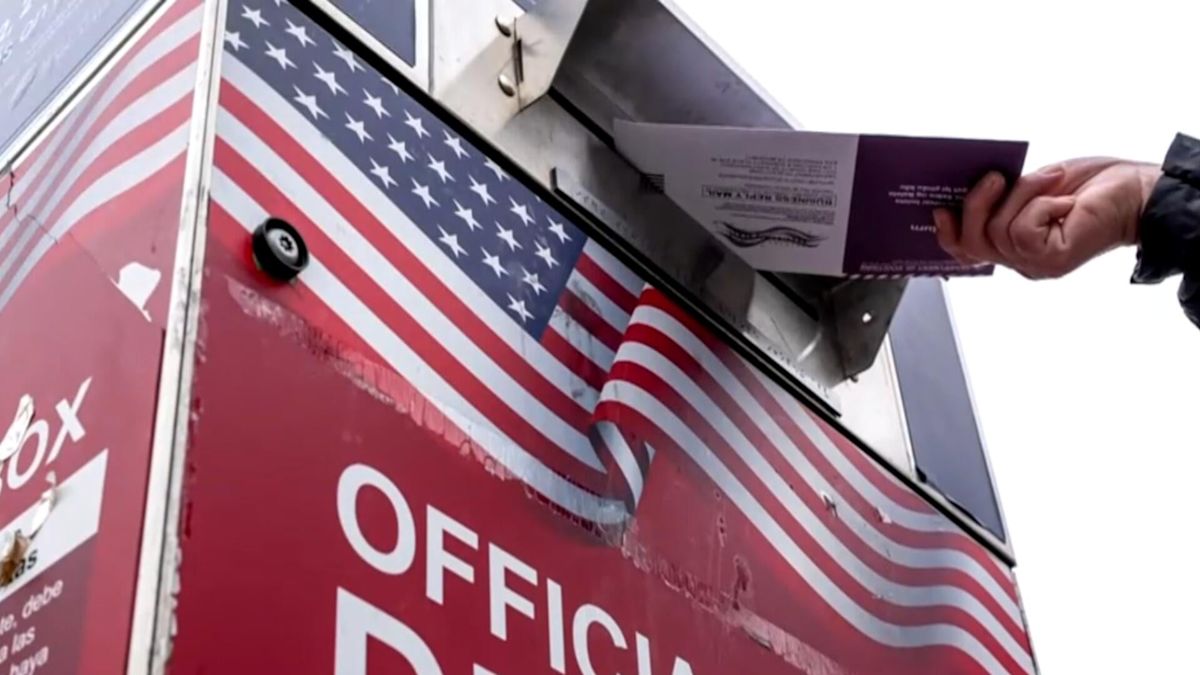
The Supreme Court has decided to leave in place a lower court order that bars the United States Postal Service from implementing new mail-in voting regulations. The decision delivers a major setback to the Trump administration, which had sought to put the controversial nationwide rules into effect ahead of the approaching November midterm elections.
In a short, unsigned order, the high court determined that the federal government was unlikely to prevail on the merits of its appeal against the preliminary injunction issued by a district court. The ruling guarantees that the newly established postal mandates will remain suspended while ongoing legal challenges continue to move through the federal court system.
The disputed guidelines, which were finalized by postal officials late last month, introduced strict technical requirements for election correspondence. Under the proposed measures, all mail-in ballot envelopes would need to adhere to specific design standards, including the use of unique tracking barcodes, while local and state election administrators would be required to upload details regarding registered voters receiving ballots into an online government portal.
Under the agency's planned enforcement mechanism, any ballot materials distributed by local jurisdictions that failed to strictly satisfy these design and reporting standards would be denied processing and returned directly to election offices.
Election administrators across the country quickly raised concerns about the practical consequences of such measures. Because mail ballots have already been printed and distributed to voters across numerous states, officials warned that overhauling administrative systems on such short notice was virtually impossible and risked widespread voter disenfranchisement.
A coalition of Democratic-led states alongside several voting rights organizations filed legal challenges against the policy, asserting that the Postal Service had overstepped its legal mandate. The plaintiffs argued that the federal agency lacks the constitutional authority to regulate election administration, a domain historically reserved for individual states.
In court filings, the challenging states cautioned that attempting to enforce the rules ahead of the November vote would ignite widespread logistical disruption. They argued that millions of citizens could be effectively prevented from casting mail-in ballots or participating in the election altogether, warning of a high likelihood of technical failures, delays, and administrative mistakes within the mail system.
Justice Brett Kavanaugh joined the majority in denying the administration’s request to enforce the regulations immediately. While noting that the Postal Service might possess a reasonable claim to statutory authority over its mailing systems, Kavanaugh concluded that enforcing such sweeping changes immediately before an election violated the Administrative Procedure Act. He stated that implementing the policy under such tight deadlines was arbitrary and capricious because election administrators lacked adequate time to comply.
Two members of the court's conservative wing, Justices Clarence Thomas and Samuel Alito, registered their dissent from Monday's order. Both justices contended that the challenging states had not demonstrated a sufficient likelihood of proving that the Postal Service’s regulations were unlawful.
Throughout the litigation, the Trump administration defended the measures as vital safeguards to protect election integrity and minimize the potential for illegal voting. Solicitor General D. John Sauer argued in court documents that mail-in voting presented a particularly harmful form of fraud that undermined public faith in the electoral process and diluted legitimate ballots.
The administration maintained that the directives constituted only modest adjustments to standard mail handling rather than direct interference in election governance. Sauer asserted that while states maintain the power to conduct elections, their use of the federal postal network requires compliance with postal authority regarding envelope formatting and addressee data.
Despite the administration's claims regarding electoral vulnerabilities, federal attorneys have not submitted evidence demonstrating widespread voter fraud associated with mail-in systems. Furthermore, President Donald Trump has himself utilized mail voting in recent Florida elections.
The Supreme Court’s action represents the latest chapter in a protracted legal dispute stemming from an executive order signed by the president in late March. That directive instructed the Postal Service to establish comprehensive standards for mail-in ballots and directed the Department of Homeland Security to compile state-level records of citizen residents.
Following the initial executive action, U.S. District Judge Indira Talwani in Massachusetts blocked principal components of the directive. However, the Supreme Court stayed that preliminary injunction on August 24 in a 6-3 decision, ruling at the time that the states' legal challenge was premature since the Postal Service had not yet formally published its finalized regulations.
The Postal Service officially released the final rules only days before that late-August Supreme Court ruling. With Monday's latest order, the high court has ensured that the status quo will remain intact for the upcoming midterm races while the underlying merits of the postal regulations are adjudicated.


(0)