
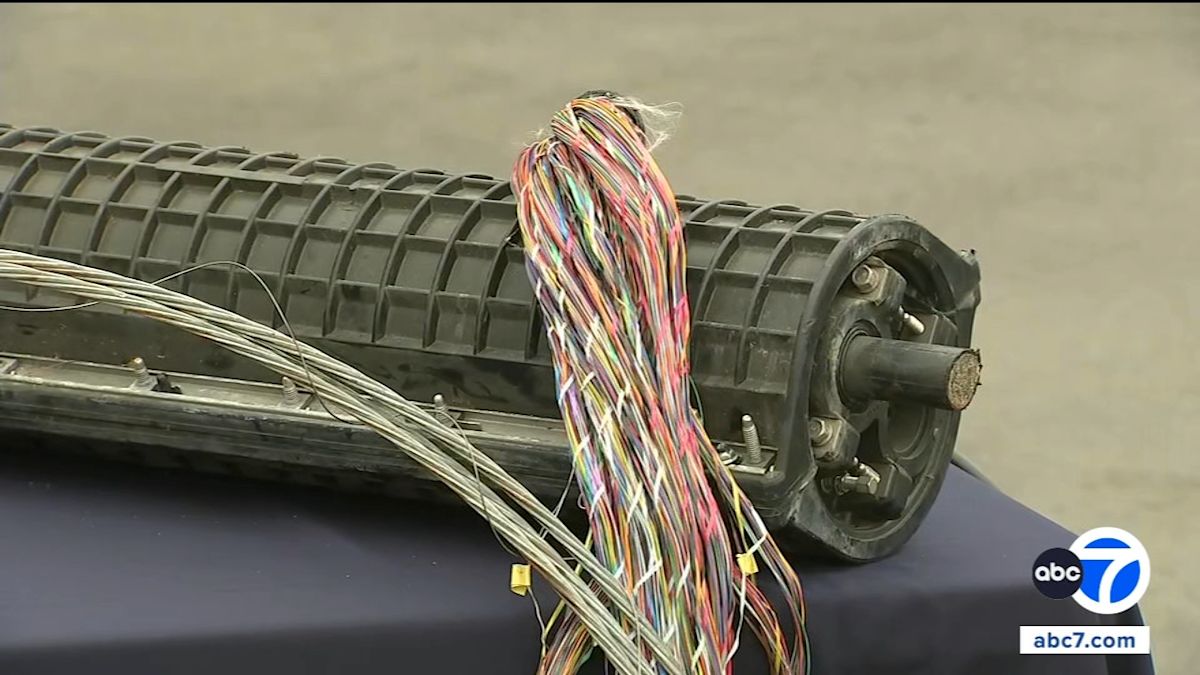
A growing coalition of civic leaders, law enforcement representatives, and business figures across California is calling on Governor Gavin Newsom to enact new legislation aimed at curbing widespread metal theft rings. The push comes as newly released figures highlight the escalating destruction of public utility systems, which has severed vital telephone connections and left numerous city streets in darkness.
According to municipal records uncovered by a 7 On Your Side Investigates public records request, the Los Angeles Department of Water and Power has suffered severe losses over the past year. Municipal utility data reveals that unauthorized individuals have stripped more than 27,000 feet of communications cable directly from public installations during that timeframe.
The volume of cable taken from the Los Angeles Department of Water and Power illustrates the immense scale confronting local utility providers. Measuring just over 27,000 feet, the stolen material equals roughly five continuous miles of wiring. If hoisted straight up into the air, that length would match the typical cruising altitude of a standard commercial jetliner.
To further contextualize the magnitude of the material lost, five miles of cable corresponds to the combined length of approximately 90 standard football fields. Placed end to end, the missing infrastructure would also span across 165 Olympic-sized swimming pools, underscoring how aggressively coordinated operations have targeted municipal networks.
The real-world impacts of these ongoing thefts extend well beyond the loss of raw materials. When organized networks strip copper and communication lines from utility corridors, basic municipal services are abruptly cut off. Neighborhoods across Los Angeles and neighboring Californian municipalities have suffered localized phone service disruptions alongside unlit roadways, creating major public safety concerns.
In response to this pervasive threat, a broad coalition gathered on Monday to urge Governor Newsom to sign Assembly Bill 1941 into law. The proposed statute seeks to modernize California’s legal approach to metal theft by creating a dedicated criminal offense titled "organized metal theft" to specifically penalize coordinated theft rings.
Under the provisions set out in AB 1941, individuals who work together to illegally remove or acquire stolen metal materials would face targeted criminal charges. Those convicted of teaming up to steal wiring or buy illicitly obtained metal on the secondary market could be sentenced to up to one year in jail.
The measure was authored by California Assembly Member Mark González, who represents portions of the City of Los Angeles. González and his supporters argue that standard criminal statutes have failed to adequately deter sophisticated groups that repeatedly target public infrastructure for profit.
González held a news conference at the landmark 6th Street Bridge in Los Angeles to formally appeal to the governor. The prominent architectural structure was specifically chosen to highlight the severe municipal impacts of repeated cable stripped from public roadways and crossings.
The 6th Street Bridge has served as a frequent target for organized thieves seeking valuable metals. Stripping operations have repeatedly torn out the bridge's streetlight wiring, leaving the heavily traveled corridor completely dark and hazardous for motorists and pedestrians navigating the crossing after nightfall.
The financial toll of these operations on the public purse is substantial. According to figures shared by González, taxpayers have already spent an estimated $11 million solely to replace the stolen electrical and communications cables ripped from the 6th Street Bridge.
During the press conference, González emphasized the fundamental need to safeguard public property from organized networks, directly addressing those responsible for stripping utility components.
"California's infrastructure is not yours to steal. We have an opportunity to give prosecutors a stronger tool to hold organized metal thieves accountable and protecting the systems that keep our communities safe and connected," González stated while addressing the media and coalition members.
Backers of the measure emphasize that municipal utilities like the Los Angeles Department of Water and Power face persistent operational disruptions as crews are forced to repeatedly repair compromised lines rather than focusing on routine infrastructure upgrades and maintenance.
Proponents also note that the pattern of infrastructure theft is not confined solely to the Los Angeles metropolitan area. Cities throughout California continue to grapple with similar disruptions, where dark streetlights and interrupted communication networks create shared hazards across municipal borders.
With legislative approval secured, Assembly Bill 1941 now sits before Governor Newsom. Local officials, police agencies, and business advocates continue to await executive action on whether the proposed one-year jail penalties and organized metal theft designation will be signed into state law.


(0)