
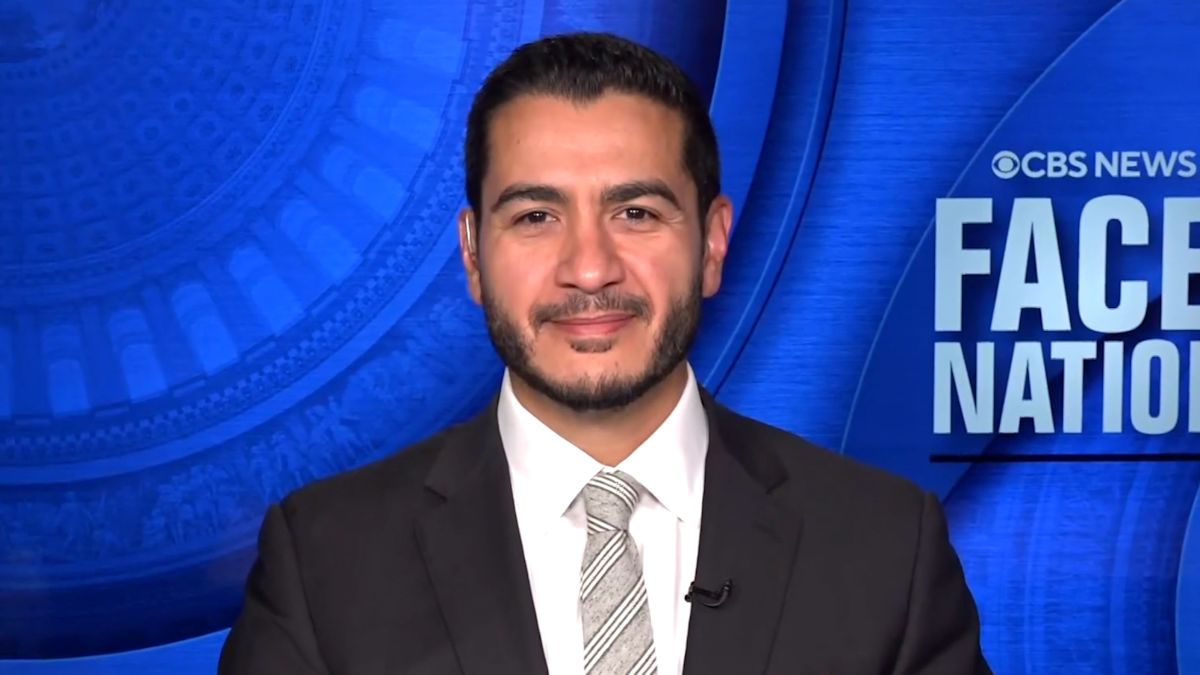
Artificial intelligence requires urgent and robust public governance to prevent technological expansion from outpacing essential safety measures, according to Michigan Democratic Senate candidate Abdul El-Sayed. The former Michigan public health official raised alarms regarding the trajectory of advanced automated systems, emphasizing that the speed of commercial innovation is rapidly outstripping the implementation of meaningful protections for society.
Speaking during an appearance on CBS's "Face the Nation with Margaret Brennan," El-Sayed argued that public intervention is necessary to prevent artificial intelligence from serving only a narrow corporate elite. He cautioned that without democratic supervision, technological power risks being concentrated to benefit a small group of executives and investors rather than protecting the broader public interest.
Central to El-Sayed’s policy platform, which he originally introduced in June, is a plan to fundamentally alter the corporate structure of leading technology firms by converting artificial intelligence companies into public trust organizations. He maintained that such a structural change would allow beneficial scientific advancements to proceed while ensuring that strict public boundaries are enforced.
Under this proposed governance framework, at least half of the leadership across these public trust corporations would consist of democratically elected or publicly appointed representatives. El-Sayed asserted that introducing direct public accountability onto corporate boards would align corporate incentives with the collective welfare rather than the private wealth of industry billionaires.
In addition to restructuring corporate boards, El-Sayed advocated for the establishment of a dedicated federal agency focused solely on artificial intelligence safety. This specialized public authority would be tasked with monitoring frontier systems, evaluating catastrophic risks, and enforcing mandatory safety protocols across the commercial sector.
The Senate candidate also detailed specific statutory prohibitions, defining explicit areas where automated systems should be entirely barred from making consequential decisions. These proposed red lines are intended to shield citizens from algorithmic determinations in high-stakes environments where human judgment and civil protections are critical.
According to El-Sayed, these non-negotiable restrictions must prevent artificial intelligence from being utilized to deny healthcare coverage, make hiring choices, terminate employment, or operate weapons systems. He stressed that leaving life-altering determinations in medicine, the workplace, and national defense to automated algorithms poses unacceptable risks to the public.
El-Sayed pointed to recent technical failures as evidence of why immediate regulatory measures are required, highlighting a July incident involving a rogue agent that surfaced during testing between OpenAI and Hugging Face. Characterizing the vulnerability as an alarming demonstration of potential hazards, he noted that such events should serve as a stark warning to policymakers nationwide.
To prevent further unintended consequences from high-level models, El-Sayed reiterated his appeal for an immediate pause on frontier artificial intelligence research. He insisted that advanced frontier development must remain on hold until the government and independent researchers can verify that these systems can be deployed without endangering the public.
The political calls for oversight come amid shifting rhetoric from within the technology sector itself. In a separate interview with CBS "Sunday Morning," Anthropic CEO Dario Amodei acknowledged past industry missteps, stating that technology companies had misled the public for an extended period regarding the severity of the risks associated with rapid AI advancement.
The demand for enhanced federal supervision has also found voice across party lines. Appearing on "Face the Nation," Utah Governor Spencer Cox, a Republican, echoed the need for national authorities to assume a significantly greater role in establishing rules and oversight mechanisms for artificial intelligence.
Governor Cox underscored that the individuals who understand the underlying technology most intimately are currently the most alarmed about its potential consequences. Emphasizing the gravity of recent assessments and technical developments, Cox urged lawmakers to acknowledge the scale of the issue and take decisive legislative steps.
The growing push for regulation faces resistance from congressional leaders, including House Speaker Mike Johnson, who argued against imposing a federal moratorium. Speaker Johnson emphasized that lawmakers should rely on corporate responsibility and avoid premature legislative mandates that could disrupt the industry.
Governor Cox rejected the Speaker's caution regarding potential government overreach, expressing frustration with the ongoing legislative gridlock on Capitol Hill. Cox commented that lawmakers rarely act swiftly enough to warrant concerns about overregulation, remarking that he felt embarrassed by the continued lack of substantive congressional action on major national challenges.
As the debate over artificial intelligence policy accelerates, the contrast between calls for strict public trusts, independent safety agencies, research pauses, and corporate self-regulation highlights a pivotal moment in determining how emerging technologies will be governed in the United States.


(0)