
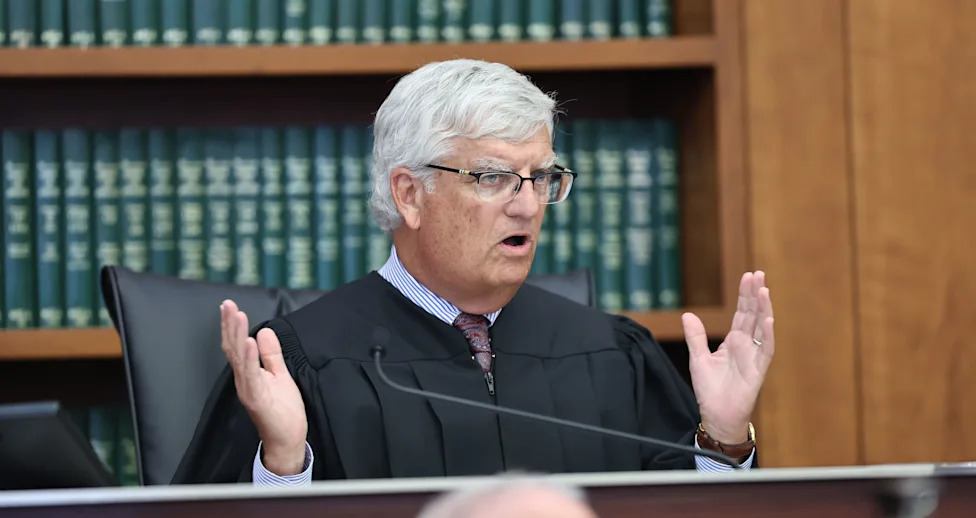
A Massachusetts superior court judge has issued an order indefinitely extending the impoundment of juror identities connected to the high-profile murder trial of Lindsay Clancy. Plymouth Superior Court Judge William Sullivan determined that widespread public attention, pervasive digital scrutiny, and ongoing concerns regarding juror safety necessitate keeping the identifying details of panel members shielded from public release for the foreseeable future.
The formal decision, filed in court on September 14, 2026, ensures that court administrative records containing the identities of those who served on the jury will remain sealed indefinitely. Judge Sullivan explained in the ruling that the intense and polarizing atmosphere surrounding the proceedings justified taking extraordinary precautions to protect the citizens who participated in the high-stakes courtroom deliberations.
Throughout the duration of the trial, the case garnered immense public attention both across Massachusetts and throughout the country. Because the proceedings were broadcast live through online video streams, the courtroom events sparked extensive daily analysis and passionate discussions across numerous social media platforms, creating a uniquely hostile and pressurized public environment.
Under normal judicial standards in Massachusetts, juror rosters and identifying records are generally treated as public documents following the conclusion of a trial. However, trial judges retain the discretion to impound these records when there is a finding of good cause. In this case, Judge Sullivan concluded that the exceptional public interest and verified security concerns fully met the legal threshold required to keep juror information strictly confidential.
To support the continued sealing of the records, Judge Sullivan pointed to multiple alarming incidents that occurred both during the trial and in the period immediately following it. Among the most notable events was the arrest of an individual who faced criminal charges after allegedly attempting to secretly record video footage of jurors as they were exiting the Plymouth courthouse grounds.
The court's order further detailed how jurors' private personal data had been identified and distributed without their permission through external channels. These unauthorized disclosures of personal information, combined with heightened online commentary, created significant concerns regarding potential intimidation, doxing, and harassment directed at the individuals tasked with evaluating the evidence.
The judge’s ruling was also informed by direct appeals from the jury itself, as at least one juror formally submitted a request asking the court to extend the impoundment order indefinitely. The juror expressed deep concern regarding the persistent public attention and the potential dangers that could arise if their identity were disclosed to the broader community.
In evaluating these factors, Judge Sullivan concluded that there continues to be a real and present risk of harm facing the jurors. The judge emphasized that protecting the safety of panel members is essential not only to prevent immediate harassment but also to safeguard the broader integrity of juror service in high-profile criminal matters.
The court warned that making the full list of juror names publicly accessible could lead to immediate and irreparable injury to the panel members and their families. Consequently, Judge Sullivan determined that the public interest in disclosure was far outweighed by the imperative to shield the jurors from unwanted exposure and potential threats.
The indefinite impoundment order follows the recent conclusion of Clancy's murder trial, which ended when the court declared a mistrial. After extensive deliberations, the jury informed the judge that members were hopelessly deadlocked and completely unable to reach a unanimous verdict on the charges, bringing the courtroom proceedings to an unresolved conclusion.
Since the trial came to an end, the public and media have sought insights from those who sat in the jury box. While a limited number of jurors have chosen to speak publicly about their experiences during deliberations, court documents indicate that the majority of deliberating members and alternate jurors have turned down interview requests and elected to remain entirely anonymous.
The judicial order explicitly restricts the court and its clerk staff from releasing official identifying records to the public or press. However, the ruling does not impose a gag order on the jurors themselves, meaning individual panel members retain the legal right to identify themselves publicly or discuss their jury service if they voluntarily choose to do so.
The underlying criminal case against Clancy dates back to January 2023, when the Duxbury mother was accused of killing her three young children. The tragic circumstances of the deaths drew intense national scrutiny, sparking widespread public debate and passionate discussions that persisted throughout the criminal prosecution.
Following the mistrial, prosecutors and defense attorneys are scheduled to return to Plymouth Superior Court later this month. Both legal teams are expected to litigate critical post-trial motions and discuss the next procedural steps, as the court determines how the unresolved criminal case against Clancy will move forward.




(0)