
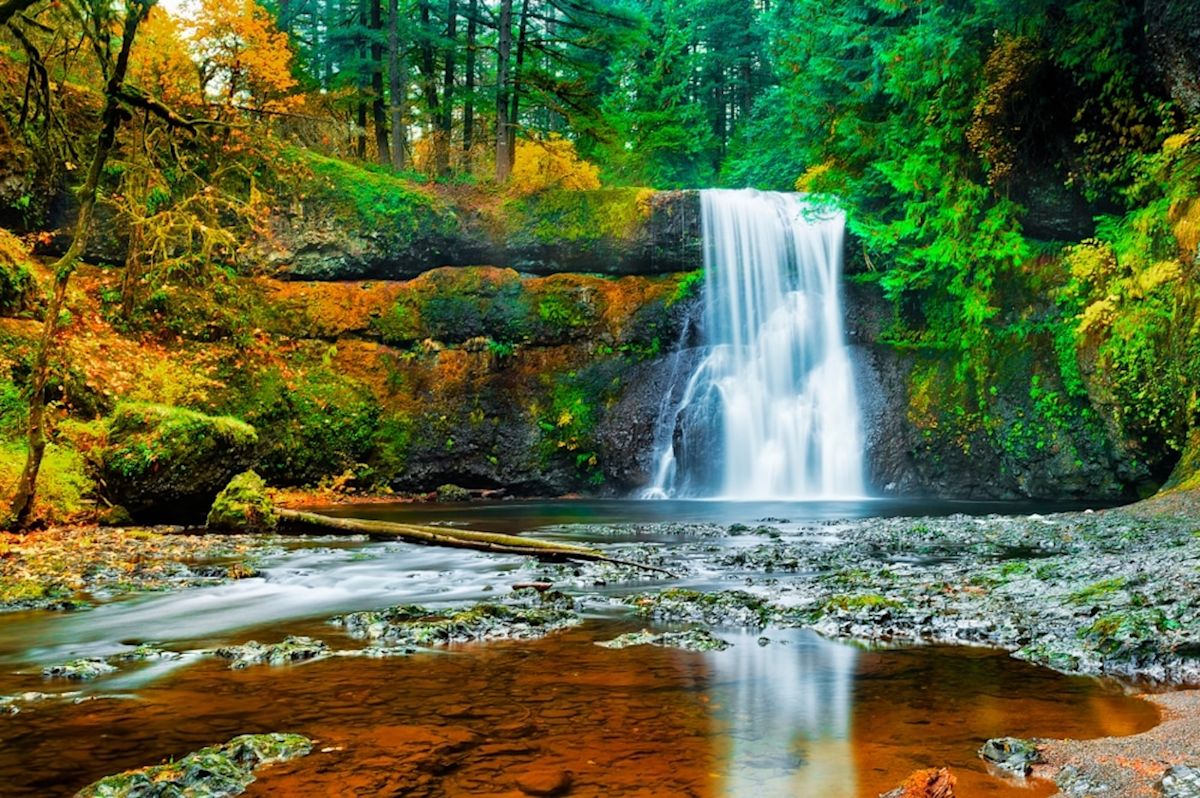
Nestled within the verdant landscape of the Pacific Northwest, Silver Falls State Park stands as Oregon's largest state park, offering an extraordinary combination of dramatic geologic features, lush old-growth forests, and historic visitor amenities. Widely celebrated for its dense concentration of cascading waters, the park provides an immersive outdoor experience where hikers can traverse deep canyon trails and subsequently relax in a hand-crafted 1930s lodge tucked beneath the woodland canopy.
Geographically situated in the foothills of Oregon’s Cascade Range near Silverton, the protected reserve encompasses more than 9,000 acres. The landscape is defined by towering old-growth Douglas firs, rugged basalt canyon walls, and the meandering waters of Silver Creek, which flow through the heart of the property. Located approximately one hour east of Salem and roughly 90 minutes from Portland, the park serves as an accessible natural retreat for day-trippers and regional travelers seeking extensive trail networks.
The centerpiece of the park’s recreational offerings is the renowned Trail of Ten Falls, a roughly eight-mile canyon loop that leads hikers past ten distinct named waterfalls. Carved deep into the basalt rock, the trail allows visitors to descend directly into the canyon environment, where several of the falls plummet more than 100 feet from sheer stone cliffs to the creek bed below.
Among these geological highlights, South Falls serves as the primary showstopper, featuring a dramatic 177-foot curtain of water. A defining feature of South Falls is the trail’s engineered path, which routes hikers directly behind the falling water through a natural rock alcove. This vantage point offers visitors the rare opportunity to view the canyon landscape through a continuous, roaring wall of white water and heavy spray.
Beyond South Falls, the park provides multiple opportunities to experience waterfalls from behind their cascades. Three additional falls along the route—Lower South Falls, North Falls, and Middle North Falls—feature similar recessed trail designs. This allows hikers to walk behind four separate cascades along a single hiking circuit, a rare hydrological and trail design feature that draws hikers from across the nation.
Additional cascades along the trail system contribute to the park's dynamic scenery, including Upper North Falls, which drops 65 feet into a pool surrounded by dense forest. The combination of varied waterfall heights, moss-draped canyon walls, and continuous moisture sustains a rich understory ecosystem that defines the interior canyon environment throughout the year.
Complementing the natural attractions is the park's historic built environment. Located immediately at the South Falls trailhead sits a historic stone and timber lodge constructed by hand during the 1930s. The structure reflects classic Depression-era architectural craftsmanship, utilizing native rock and heavy timbers to blend the facility into the surrounding Douglas fir forest.
Inside this historic building operates the South Falls Café, a dining venue managed by Guest Services, a concessionaire known for operating hospitality services across several major national parks. The café provides hot espresso drinks, fresh baked goods, sandwiches, and regional beverages on tap. The facility offers hikers an indoor culinary respite immediately following long hours of traversing damp, mist-filled canyon paths.
For visitors planning extended stays, the park offers additional hospitality infrastructure at Smith Creek Village. This dedicated lodging area features a collection of cabins and cottages alongside the Big Leaf Market & Grill. Serving as a general store, coffeehouse, and social gathering hub, the market allows overnight guests and campers to purchase prepared meals, specialty coffee, and provisions without leaving the park grounds.
Seasonal shifts significantly alter the park experience throughout the calendar year. Spring marks the peak volume for the waterfalls, as melting mountain snowpack swells Silver Creek and intensifies the flow across all ten drops. During the summer months, the deep basalt canyon offers cooler, shaded microclimates, while autumn brings a dramatic visual shift as the bigleaf maples lining the canyon rim turn vibrant shades of yellow and gold.
Managing visitor traffic remains an ongoing operational priority for park authorities, as Silver Falls accommodates roughly 1.5 million visitors each year. Due to the high popularity of the Trail of Ten Falls and the South Falls day-use area, officials recommend arriving early, particularly during busy weekend periods. Visitors must also secure a day-use parking permit at trailhead kiosks, payable via cash or card.
Practical preparation is essential for those attempting the full loop. Park officials advise allotting at least half a day to navigate the complete eight-mile circuit, which features persistent elevation changes, switchbacks, and trail sections continually dampened by waterfall spray. Sturdy, moisture-resistant footwear is strongly encouraged to handle the wet rock surfaces and trail mist.
Hikers should also remain aware of ongoing maintenance and dynamic trail conditions. Storm damage earlier this year led to temporary closures along sections between Twin Falls and North Falls, where repair efforts have been underway. In response, park managers have highlighted alternative routing options, such as the shorter loop connecting South Falls to Winter Falls, which remains open and still encompasses several marquee cascades.
Travelers planning an excursion are encouraged to consult the official Oregon State Parks website for real-time updates regarding trail status, repair timelines, and seasonal facility hours before heading out. By balancing rugged, world-class trail networks with historic Depression-era hospitality, Silver Falls State Park remains a crown jewel of Oregon’s public lands system.


(0)