
During the early 1960s, American home entertaining operated on the premise that modern domestic life had crossed into a futuristic era. A successful hostess was expected to showcase this forward-looking sensibility directly from the kitchen, presenting guests with the latest innovations in food preparation, storage, and presentation.
This culinary modernity was visible in both the gadgets on display and the commercial packaging utilized in meal preparation. Sideboards frequently featured flaming chafing dishes keeping sauces hot, while grocery freezer cases supplied wire baskets of frozen puff pastry shells. Supermarket shelves allowed home cooks to incorporate canned clams and crabmeat transported from distant shores, alongside mass-market cereals that provided complete party recipes directly on their cardboard boxes.
The resulting appetizer menus leaned heavily toward the portable, the skewered, and the dramatic. Entertaining formats were engineered around social gatherings where guests mingled on their feet, requiring bite-sized foods that could be held comfortably in one hand while balancing a cocktail in the other.
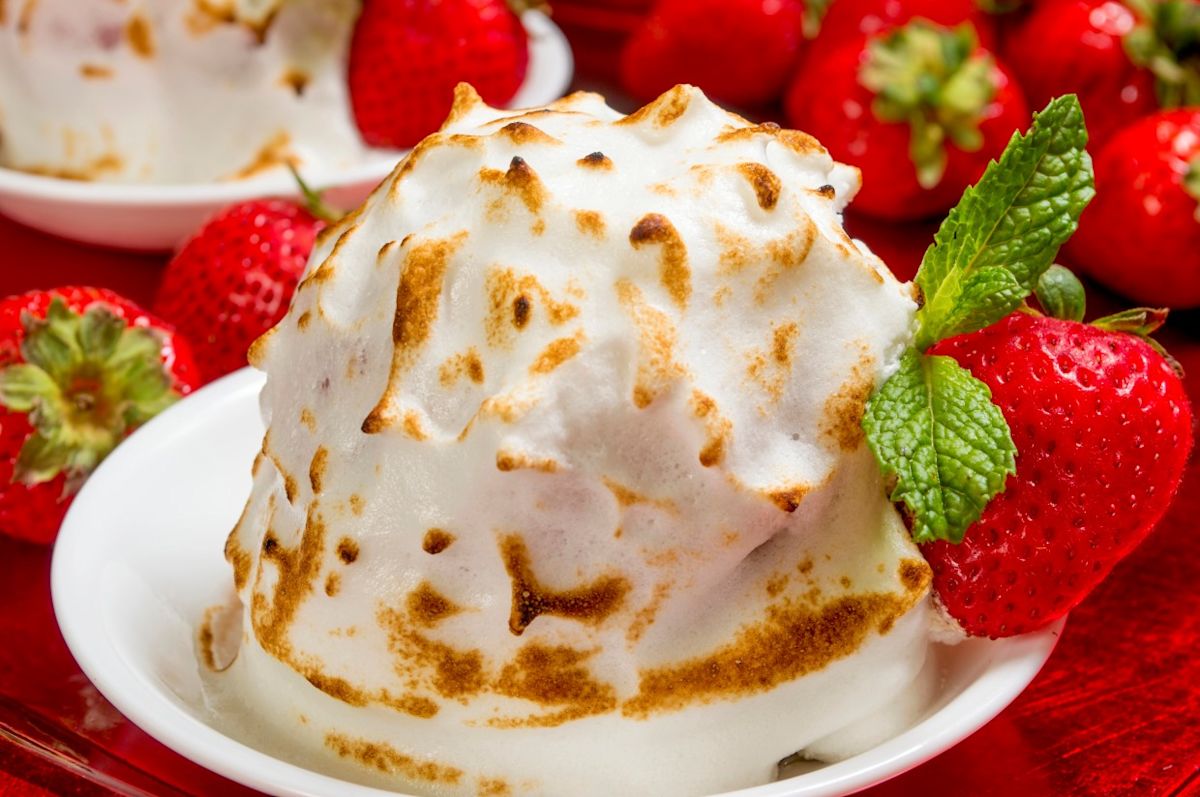
When food was not bite-sized, it compensated with high visual theater. Mid-century centerpieces frequently arrived at the table ablaze, encased in savory frostings like layered sandwich loaves, or crowned with architectural domes of browned meringue as seen in classic Baked Alaska presentations.
Among the standout skewered offerings was rumaki, a staple born not out of the South Pacific, but from the mid-century American Polynesian restaurant boom. The dish was given an exotic-sounding name designed to suggest foreign travel, masking its domestic origins while fitting neatly into the tiki-themed dining trends of the era.
The construction of rumaki paired distinctive textures by wrapping trimmed pieces of chicken liver and crisp canned water chestnut rounds inside half-strips of cured bacon. Fixed securely in place with wooden toothpicks, these bite-sized bundles were broiled under intense direct heat until the exterior pork turned thoroughly crisp.
The success of the dish relies almost entirely on its marinade, which combines soy sauce, packed light brown sugar, dry sherry, minced garlic, and grated fresh ginger. This mixture cuts the heavy, iron-rich flavor of the liver while the sugar counterbalances the high salt content released as the bacon renders down into the meat.
Proper timing during the marination stage is critical to achieving the right consistency. A quick 30-minute soak leaves the interior of the liver bland and unseasoned, whereas leaving it submerged overnight breaks down the protein into a chalky mess; roughly two hours in the refrigerator achieves thorough flavor penetration while preserving a clean, firm bite.
To cook the appetizers, hostesses arranged the assembled skewers on a wire rack set over a rimmed sheet pan, allowing excess bacon fat to drip away rather than pool. Positioned six inches beneath a preheated broiler, the pieces cooked for six to eight minutes per side, reaching a safe internal temperature of 165 degrees before resting for five minutes so the crisp bacon could firm up.
Another signature appetizer to emerge from the Polynesian dining craze was crab rangoon. Much like rumaki, the dish was an American commercial creation that borrowed the name of a Burmese capital, despite relying on cream cheese—an ingredient entirely absent from authentic Burmese cooking traditions.
The fried parcel gained widespread fame in the 1950s after appearing on the menu at Trader Vic’s, the famed Oakland establishment founded by restaurateur Victor Bergeron. Its appeal lay in the clever pairing of luxurious restaurant presentation with accessible, shelf-stable grocery items.
While the cream cheese, lump crabmeat, and seasonings were widely available in conventional supermarkets, wonton wrappers initially took longer to gain mainstream distribution. For years, the thin dough squares remained confined to specialized urban Asian markets before eventually becoming common fixtures in suburban refrigerated dairy cases.
Preparing the crab rangoon filling required only a few minutes of effort, combining softened cream cheese with picked lump crabmeat, thinly sliced green onions, Worcestershire sauce, soy sauce, minced garlic, and ground white pepper. Chilling the blend for at least 30 minutes ensured it was firm enough to portion cleanly into the wrappers.
Assembly required careful handling, as cooks placed a tablespoon of filling into the center of each three-and-a-half-inch square wrapper, leaving ample border room. After brushing the edges with a mixture of beaten egg and water, the dough was folded into a tight triangle, pressing firmly outward from the center to eliminate trapped air pockets that could burst during cooking.
Frying presented the most delicate step of the process, demanding a precise oil depth of two inches held steadily at 350 degrees. Because wonton wrappers brown in less than two minutes, cooking in small batches prevented the oil from dropping in temperature, avoiding greasy, pale wrappers while ensuring the cream cheese core was heated through.
These mid-century party dishes reflect an era defined by a blend of convenience, novelty, and theatrical presentation. By transforming commercial pantry staples into conversation pieces, 1960s hostesses established a distinctive style of entertaining that continues to define retro American food culture.


(0)