
Throughout modern history, September 13 has repeatedly served as a backdrop for defining moments in warfare, governance, international diplomacy, and culture. From the embattled waters of Baltimore Harbor in the early nineteenth century to pivotal civil rights decisions and modern disaster responses, the date marks numerous occasions where global trajectories shifted significantly.
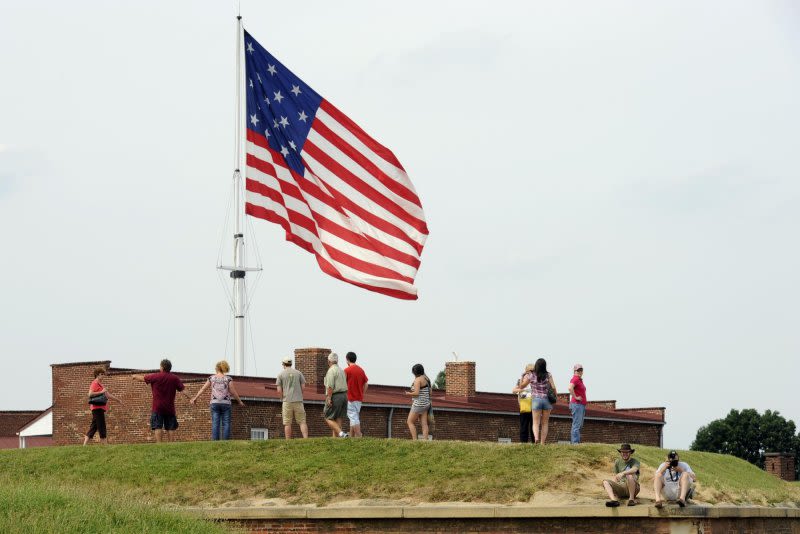
One of the most enduring events occurred on September 13, 1814, during the War of 1812. As British naval forces launched a ferocious bombardment against Fort McHenry in Maryland, an American lawyer and poet named Francis Scott Key witnessed the assault. Inspired by the sight of the American garrison flag still flying over the fortification through the smoke and barrage, Key penned the patriotic verses that would eventually become the United States national anthem, "The Star-Spangled Banner."
The defense of Fort McHenry proved to be a critical turning point in the conflict, halting British advances toward Baltimore. Key’s evocative words captured the tension of the overnight siege, creating an indelible national symbol that reflected the resilience of the young republic in the face of foreign invasion.
More than a century later, on September 13, 1940, the realities of total warfare struck the heart of the British monarchy during World War II. Amid the relentless German air campaign known as the Blitz, a bomb strike destroyed the private chapel at Buckingham Palace in London. The attack underscored that neither sovereign residences nor ordinary neighborhoods were immune to the aerial bombardment leveled against Great Britain.
Buckingham Palace would ultimately be targeted and struck nine separate times throughout the war. Ten days after the chapel was ruined, King George VI addressed the public, publicly denouncing the profound wickedness against which the Allied nations were fighting. The royal family's decision to remain in the capital during the strikes served as a major morale booster for the British public during the darkest days of the conflict.
Political history was rewritten on September 13, 1948, when Maine Republican Margaret Chase Smith secured a historic victory in her bid for the United States Senate. By winning the election, Smith became the first woman in American history to serve in both chambers of Congress, having previously served in the House of Representatives. Her breakthrough established a groundbreaking precedent for female leadership in federal governance.
In contrast, September 13, 1971, marked one of the deadliest confrontations in the history of American civil authorities and penal systems. Following days of tense standoff, New York state armed forces stormed the Attica Correctional Facility to regain control from rioting inmates. The resulting operation led to the deaths of 43 people, including both hostages and incarcerated men, sparking fierce national debates surrounding prisoner rights and state intervention.
Diplomatic history witnessed a monumental breakthrough on September 13, 1993, when leaders from the Middle East gathered on the South Lawn of the White House. In an unprecedented ceremony, Israeli Prime Minister Yitzhak Rabin and Palestine Liberation Organization Chairman Yasser Arafat signed a declaration of principles aimed at establishing interim Palestinian self-rule.
The White House signing represented a transformative milestone in Middle East diplomacy, laying the groundwork for transitional governance agreements. While the broader peace process would face immense hurdles in the decades to follow, the image of former adversaries joining hands in Washington remains a defining visual of late-twentieth-century statecraft.
Cultural tragedy struck on September 13, 1996, with the death of acclaimed rapper and actor Tupac Shakur. The 25-year-old artist succumbed to his injuries days after being targeted in an ambush shooting on September 7. Shakur’s untimely passing sent shockwaves through the global music industry, ending the career of one of hip-hop’s most influential and socially conscious voices.
The date also marks a crucial phase in the nation's recovery from the September 11 terrorist attacks. On September 13, 2001, federal regulators permitted commercial airlines to resume flights across the United States. The skies reopened under strict, unprecedented security protocols at airports nationwide, transforming the landscape of civil aviation and passenger screening permanently.
International human rights made a major stride forward on September 13, 2007, when the United Nations General Assembly adopted the Declaration on the Rights of Indigenous Peoples. Although the measure was non-binding and faced formal opposition from a small group of nations including the United States, it served as a watershed international framework. The document established universal standards recognizing the individual and collective rights of Indigenous populations to their culture, identity, ancestral language, education, and health.
The following year, on September 13, 2008, nature demonstrated its immense destructive force when Hurricane Ike made landfall on the Texas Gulf Coast. Slamming into Galveston and the Houston metropolitan area with sustained winds of 110 mph and torrential rain, the monster storm forced roughly one million residents to evacuate and severed electrical power to millions of homes and businesses.
The devastation left by Hurricane Ike was vast and deadly, claiming more than 100 lives across the United States and roughly 75 in Haiti. As with many other significant occurrences tied to this date, the aftermath of Ike highlighted the enduring human challenge of confronting, rebuilding, and learning from moments of profound crisis.





(0)