
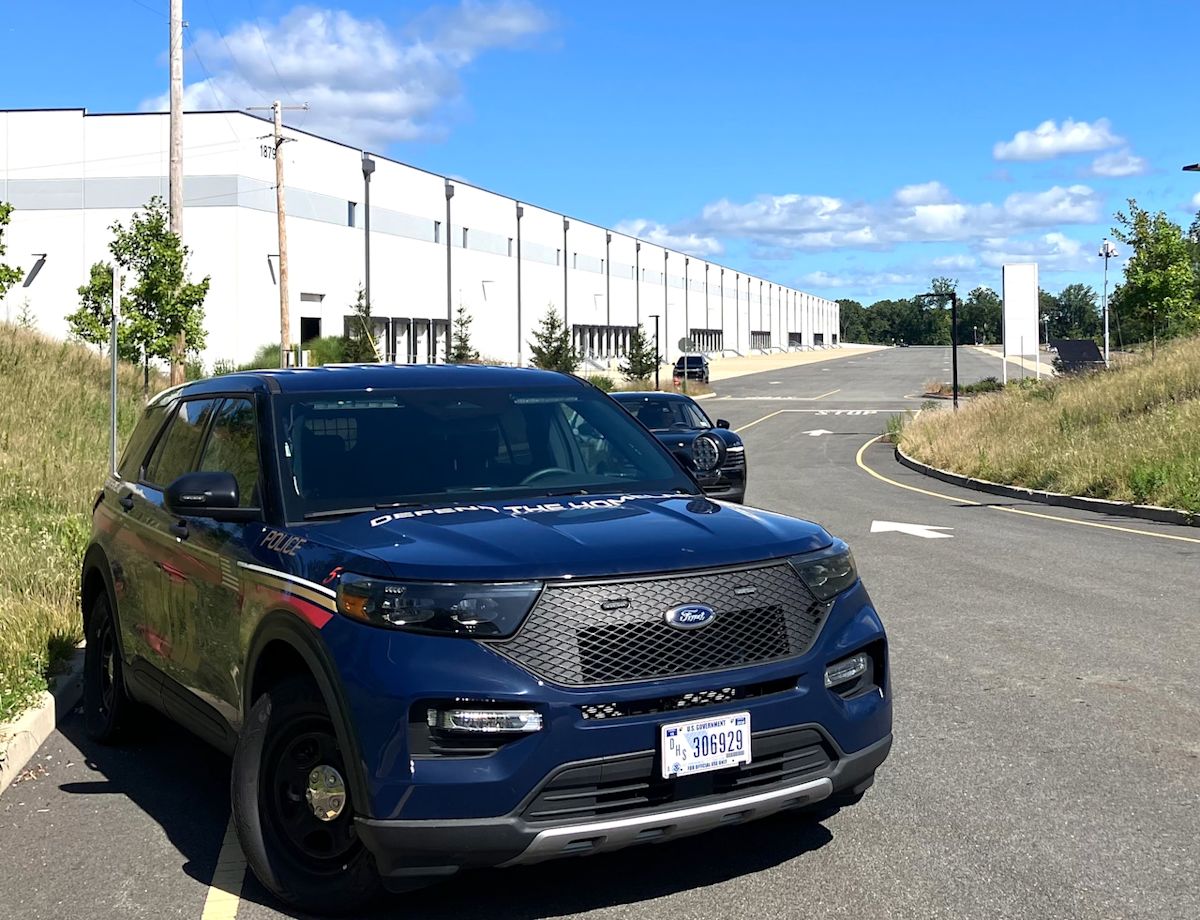
The New Jersey State Attorney General’s Office has launched a review into allegations that U.S. Immigration and Customs Enforcement utilized a Roxbury warehouse to hold detainees, an action that would stand in direct violation of a court-brokered legal agreement. Under that binding settlement, the federal government is prohibited from using the expansive commercial site as a detention center until a comprehensive environmental assessment is carried out.
State law enforcement officials confirmed their scrutiny of the federal agency’s operations following formal complaints regarding recent activity at the property. A spokesperson for New Jersey Attorney General Jennifer Davenport warned that any attempt by ICE to convert the Ledgewood location into an active holding venue would breach the standing judicial order, emphasizing that the state intends to pursue all necessary remedies should non-compliance be substantiated.
The inquiry was initiated after legal counsel representing the advocacy coalition No ICE in Northern Jersey Alliance, known as NINJA, submitted a detailed letter to Davenport. The correspondence alerted state authorities to an incident in which federal agents reportedly brought at least one individual to the warehouse for temporary processing following an immigration enforcement operation in the nearby Morris County community of Dover.
According to the advocacy group's findings, the captured individual was transported to the facility situated off Route 46 before subsequently being transferred to the Elizabeth Contract Detention Center in Union County. The group argued that this sequence of events demonstrates the federal agency is actively utilizing the dormant commercial space as a staging ground and transfer point for regional operations.
In his communication to the attorney general, NINJA attorney David Broderick underscored that ICE appears to be employing the site as an unauthorized transfer hub designed to support wider enforcement raids across northern New Jersey. The alliance contends that such operational use circumvents the strict restrictions mandated by the federal court agreement.
Evidence compiled by the advocacy organization includes documentation indicating that the transport vehicle carrying the detainee was located on the warehouse grounds precisely when the man managed to place a telephone call to a relative. During that brief conversation, the detainee reportedly told his family member that he was being confined inside a prison or jail environment.
Dover Town Council Member Sandra Wittner confirmed that she spoke directly with the detained individual’s adult daughter. According to Wittner, the man contacted his daughter at 8:52 a.m. to report his detention after being apprehended during a Friday morning sweep that targeted local parks and pedestrian walkways. Wittner noted that up to seven men were seized during the morning operation, adding that another individual arrested during the same sweep was deported to Ecuador within a week.
The physical tracking of the transport was corroborated by Kathleen Salgado, a NINJA volunteer who resides in Andover and works near the warehouse in Dover. Salgado recounted that after viewing freshly shared social media footage of the morning arrests, she spotted a dark gray SUV matching the vehicle in the video along Route 46. After filming the vehicle while stopped at an intersection, she followed the SUV and observed it turn directly into the driveway leading to the Roxbury facility.
Physical access to the location remains tightly restricted. The warehouse itself is set back and obscured from Route 46, and access is monitored by on-site security. A uniformed ICE officer alongside a private security guard stationed at the top of the entrance driveway turned away a reporter seeking entry to inspect the premises, while ICE headquarters declined to provide comment regarding the reported activities.
The underlying legal controversy dates back to a settlement formalized on May 12 between New Jersey, municipal leaders, and the Department of Homeland Security under the administration of President Donald Trump. Under that pact, federal authorities agreed to halt all plans to house detainees at the 470,033-square-foot facility pending a mandatory review under the National Environmental Policy Act of 1970.
That agreement arose from a federal lawsuit filed on March 20 by the state of New Jersey and Roxbury Township. The joint complaint accused the federal government of violating both the 1970 environmental statute signed by President Richard Nixon and the Intergovernmental Cooperation Act of 1968, signed by President Lyndon B. Johnson. The resulting accord was signed by Davenport, Roxbury attorney James Bryce, and Deputy U.S. Attorney General Krysal-Rose Perez on behalf of ICE.
The federal government acquired the vacant Ledgewood property over the winter for $129 million, seeking to establish a major new processing hub in the state. The proposed center was intended to complement ICE’s existing detention footprint in New Jersey, which currently includes Delaney Hall in Newark and the privately operated Elizabeth Contract Detention Center.
The prospect of establishing a facility holding up to 1,500 detainees around the clock has drawn fierce pushback from local residents, environmental advocates, and municipal leaders. Opponents have repeatedly emphasized that the rural, environmentally sensitive parcel possesses water and sewage infrastructure designed to support only several dozen industrial employees, raising severe public utility and environmental concerns.
Roxbury Mayor Sean Potillo affirmed that local officials are actively monitoring conditions at the warehouse, though he refrained from commenting on specific allegations raised by NINJA because of the active litigation. Potillo emphasized that the township remains committed to investigating all credible reports and will deploy every available legal and political resource to safeguard local residents, property, and natural resources.


(0)