
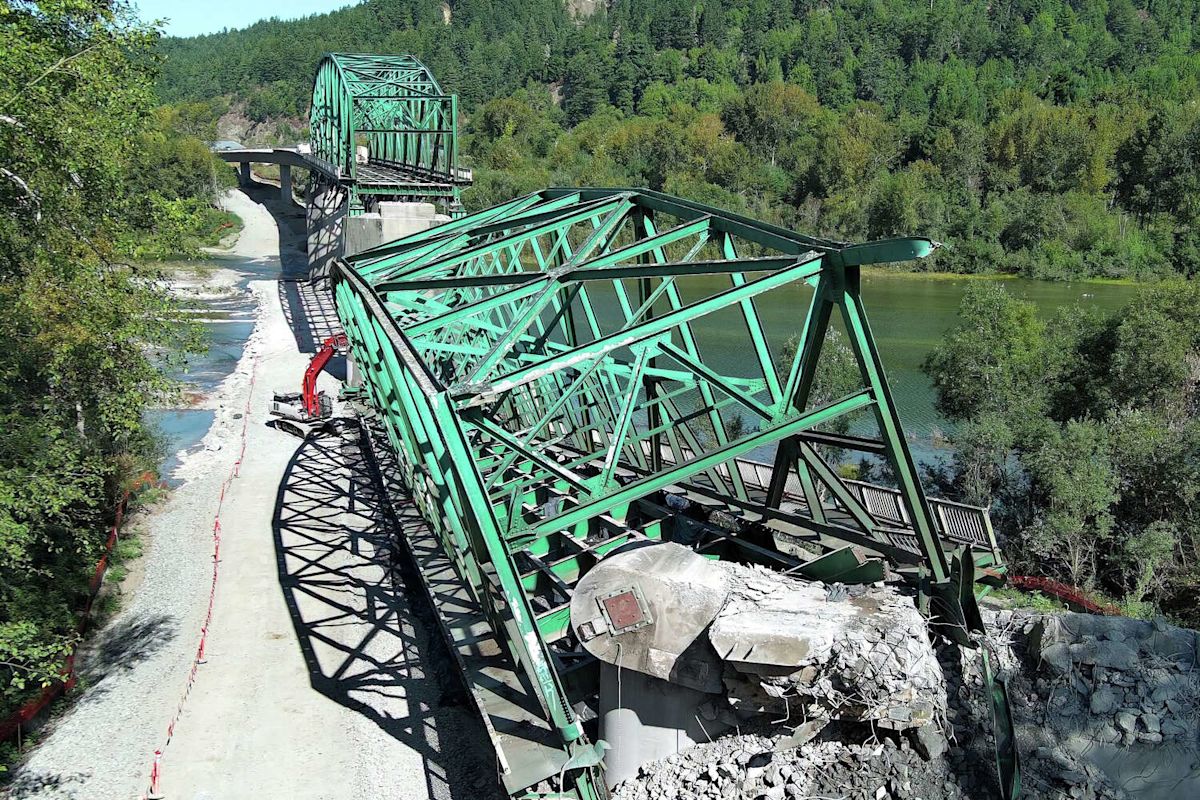
Transportation crews on California's North Coast have initiated a comprehensive, multi-year infrastructure overhaul on Highway 101, marking the start of a critical project designed to safeguard the region’s vital transit network against catastrophic seismic activity. The effort centers on the Eel River Bridge, a key crossing situated just north of Rio Dell in Humboldt County, where aging components are being dismantled to clear the way for modern, earthquake-resilient structures.
Motorists traveling through Humboldt County are expected to encounter prolonged travel challenges, as state officials caution that the corridor could experience traffic slowdowns and bottlenecks lasting through 2030. Highway 101 serves as the primary artery along California's northern coast, making continuous access crucial even as heavy construction equipment and altered road configurations disrupt typical travel patterns.
The first major milestone of the venture took place when crews from the California Department of Transportation, known as Caltrans, brought down the initial section of the older Eel River Bridge structure. The targeted demolition represents the preliminary stage of a broader engineering initiative aimed at replacing deteriorated or seismically deficient components of the crossing with modern infrastructure engineered to withstand powerful earthquakes.
This North Coast crossing is far from an isolated case in California’s vast transportation network. The Eel River structure is one of more than 2,000 bridges across the state that Caltrans has identified as requiring significant rehabilitation, structural retrofitting, or total replacement to meet contemporary seismic safety thresholds and endure future geological shocks.
According to updates shared by Caltrans on social media, the initial demolition phase will advance rapidly through the early autumn months. Demolition teams are scheduled to dismantle three bridge segments alongside their corresponding support elements before the end of September, methodically clearing away the older spans that no longer meet modern engineering demands.
In addition to removing the overhead bridge components, construction teams will also work on clearing surrounding support elements. Officials confirmed that a temporary rock berm built to facilitate access is scheduled for removal by the middle of October, marking the conclusion of the initial phase of heavy structural demolition directly impacting the waterway.
Rather than executing a complete demolition of the entire crossing from bank to bank, state planning documents outline a hybrid engineering approach. According to environmental filings under the California Environmental Quality Act, four of the structure’s spans will be preserved and seismically retrofitted rather than razed, allowing engineers to enhance structural integrity while efficiently utilizing allocated funds.
Environmental guidelines and river conditions also heavily dictate the pace and sequencing of the project. Caltrans announced that construction activities will shift away from the active riverbed during the winter months, with crews focusing on structural work outside the main channel before returning to install foundational piles for the replacement bridge next summer.
To keep traffic moving across the Eel River during construction, Caltrans has put comprehensive traffic management plans into place. While the northbound side of the crossing remains completely out of service, the highway benefits from an existing parallel bridge that will accommodate shifted traffic lanes in both directions for the duration of the project.
Even with the parallel crossing in active use, drivers must adjust to more demanding roadway conditions. State transportation officials warned that motorists should anticipate reduced speed limits, localized lane reconfigurations, and intermittent slowdowns caused by heavy construction machinery entering and exiting the work zone.
The major undertaking is backed by substantial public investment approved at both state and federal levels. In August, the California Transportation Commission officially allocated $69.8 million in total project funding to support the comprehensive bridge replacement and retrofit operations.
The financial package relies primarily on federal transportation dollars, with nearly $62 million originating from the federal Infrastructure Investment and Jobs Act passed in 2021. The remaining financial balance is supplied by state revenue raised through California’s Road Repair and Accountability Act of 2017.
The visible demolition of the local landmark has sparked reflection among area residents, who shared their thoughts on community forums as the old spans were pulled down. While some expressed nostalgia for the historic appearance of the longstanding bridge, community members acknowledged the pressing necessity of modernizing the crossing to ensure public safety in a seismically vulnerable region.
Local resident Kathi Edwards expressed mixed feelings online, noting that while the original span had a certain charm and the "good old days" were concluding, she recognized the ultimate importance of having earthquake-safe infrastructure in place for the community's future.
With construction operations mapped out through 2030, Caltrans and North Coast communities are preparing for several years of steady work along the river corridor. Once finished, the upgraded Eel River Bridge will provide a structurally fortified highway link, ensuring that Humboldt County’s primary transportation route remains intact and resilient against future major earthquakes.





(0)