
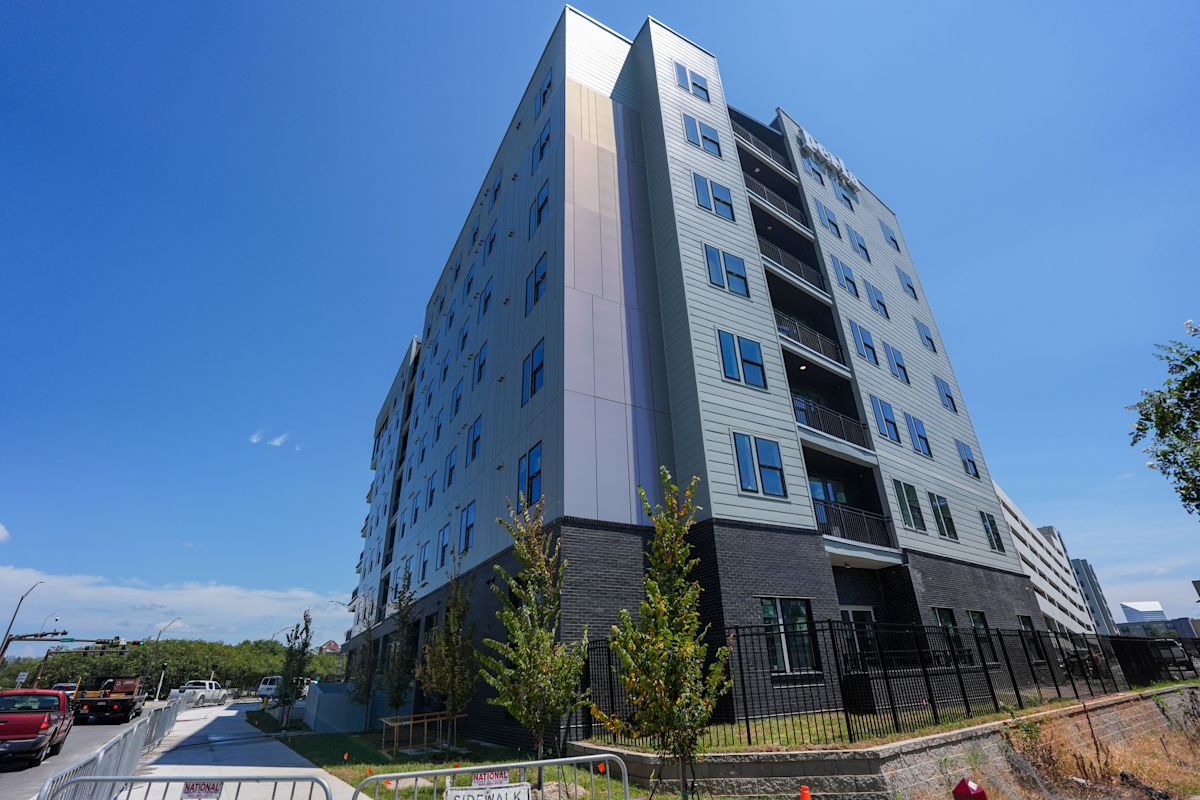
The opening of a brand-new residential complex situated across from Florida State University's Doak S. Campbell Stadium has been overshadowed by persistent operational hurdles and scheduling setbacks. Hundreds of university students have experienced severe disruptions after Perla Apartments postponed its initial move-in timeline by more than three weeks. The situation has forced many incoming residents into temporary accommodations right at the start of the academic semester.
Originally slated to open its doors on Friday, August 21, the development faced immediate delays that left enrolled students from nearby institutions in housing limbo. The displaced population includes individuals attending both Florida State University (FSU) and Florida A&M University (FAMU). Because the unexpected postponement arrived alongside the start of collegiate coursework, affected scholars and their supporting family members were forced to seek immediate stopgap lodging across the Tallahassee area.
Management at the newly constructed facility attempted to manage the fallout by circulating multiple digital notices to future tenants in the weeks that followed. On September 2, an update from property officials informed residents that a revised target date for moving in was projected for no later than September 12, 2026. However, ongoing procedural requirements continued to complicate the schedule as local building inspections and regulatory approvals were finalized.
Communication regarding municipal documentation remained a central point of concern for future occupants. A subsequent notice dispatched on September 9 indicated that the Certificate of Occupancy applications for Building B and Building C would be formally submitted the following day. That same notification established a secondary deadline, specifying that residents assigned to Building A would likely have to wait until September 19 before they could officially occupy their leased units.
The shifting dates and inconsistent updates generated significant anxiety among parents who were attempting to assist their children with the transition into university life. Axel Bertran de Balanda, whose child was scheduled to live at the complex, expressed deep frustration over the prolonged uncertainty and the overall clarity of the communication provided by property managers. He noted that the lack of definitive answers proved to be one of the most taxing elements of the ordeal.
Public dissatisfaction quickly spilled over into online forums and digital platforms, where family members aired their grievances concerning the development’s late alerts. One parent noted publicly on social media that the initial notice of postponement arrived with less than 24 hours of warning, compelling them to hurriedly search for alternative accommodations so their daughter would not be left without a roof over her head.
Even tenants who considered themselves relatively fortunate encountered lingering disappointments. William Ales, an international affairs student at FSU, acknowledged that his circumstances were better than most because he had a private room, supportive parents to haul belongings, and accommodating friends. Nevertheless, he voiced frustration over management's timing, explaining that although correspondence was consistently apologetic, it was routinely delivered too late to prevent major logistical headaches.
For other residents, the delay triggered a chaotic rotation through temporary living arrangements across the city. Amélie Bertran de Balanda, an incoming freshman at FSU, detailed how the disruption forced her to relocate repeatedly between short-term rentals and hotels. The constant transitions disrupted the critical first weeks of her collegiate career, preventing her from establishing a stable daily routine.
The housing shortage became particularly acute on dates when the Florida State Seminoles football team hosted home games. With Tallahassee hotel rooms rapidly booking up for visiting sports fans, several displaced students were forced to relocate to lodging located substantial distances away from the primary university campus. This added significant commuting friction for those without personal transportation.
Navigating daily responsibilities without a private vehicle posed unique logistical challenges for affected undergraduates. For students like Amélie Bertran de Balanda, who lacked access to a car, retrieving essential belongings from distant storage units created extra burdens. These transportation barriers added another layer of complexity to an already stressful relocation process during the initial weeks of the fall term.
Questions regarding administrative transparency also surfaced after interactions between parents and leasing personnel prior to the scheduled opening came to light. The elder Bertran de Balanda stated that when he visited the complex's leasing facility in early July to confirm the August 21 date, staff members assured him that everything was on track. He noted that representatives explicitly claimed that the property had already secured its formal Certificate of Occupancy well before the scheduled launch date.
Efforts were made by campus reporting staff to obtain a direct statement and clarification from Perla's management group regarding the regulatory delays and communication complaints. Despite the ongoing inquiries surrounding the administrative decisions that led to the displaced student population, the development's management team has faced mounting scrutiny from the academic community it intends to serve.
Despite the turbulent three-week wait, the physical process of finally unloading belongings received positive feedback once access was granted to certain buildings. When families were ultimately permitted to enter their assigned spaces, on-site personnel and hired moving crews provided hands-on assistance, facilitating a smooth transition on the physical move-in day that stood in stark contrast to the preceding administrative complications.
To offset the hardships endured by individuals whose units remain unavailable, the property management group outlined an ongoing relief package. The promised financial remediation includes daily rent credits, distributed meal vouchers, organized transportation assistance, and complete reimbursement for off-site storage expenses incurred during the displacement period. These measures aim to alleviate some of the financial and logistical strain while the remaining buildings await final clearance for occupancy.





(0)